
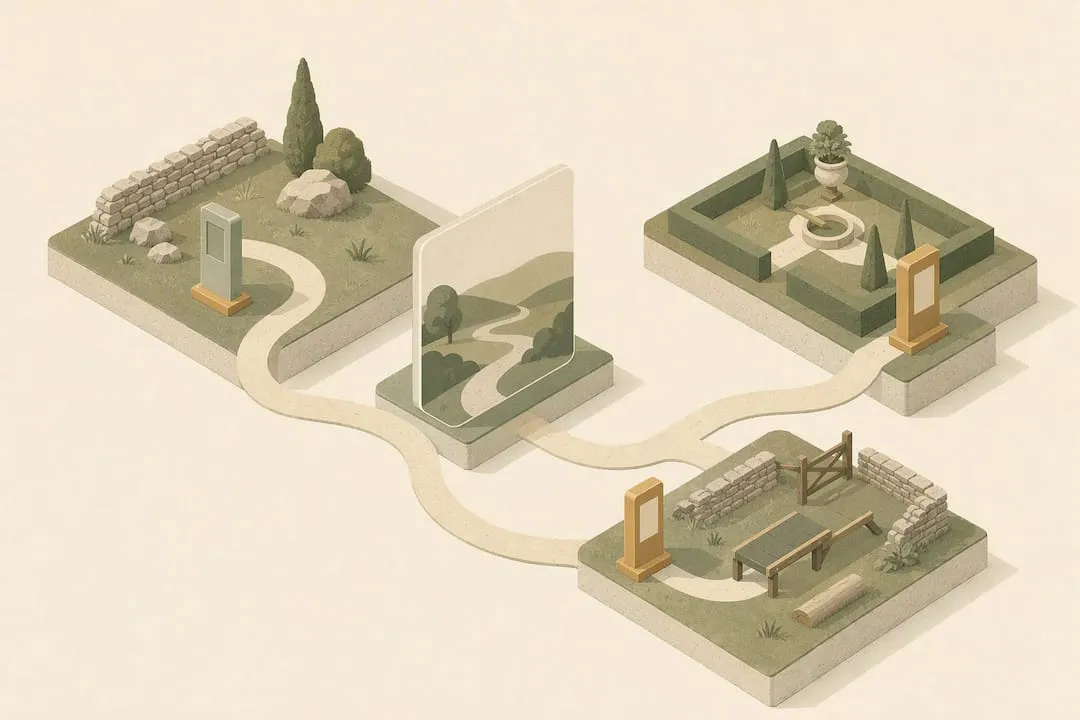
For a family day out in the Cotswolds, start with Cotswold Wildlife Park, Cotswold Farm Park, Cotswold Country Park & Beach, Blenheim Palace, Sudeley Castle, Westonbirt Arboretum, Broadway Tower or the Gloucestershire Warwickshire Steam Railway. The rule that makes any of them work: pick one main activity per day, check what the ticket actually includes, and allow three to four hours for the big ones. Everything below is the detail that decides whether the day goes well — the age limits, the winter closures and the things sold separately.
TL;DR:
- One main activity per day. The big sites take three to four hours and stacking two is how a good day turns into a bad one.
- Check the ticket before you go. Blenheim's Adventure Play needs its own pass on top of palace admission, and Cotswold Country Park charges per vehicle before you have paid for a single activity.
- Two sites close for winter: Sudeley Castle shuts from early November to mid-March, and the Cotswold Motoring Museum closes for the deep winter.
- Water activities have hard limits. AquaVenture is over-sixes only, with a swimming test — it is not somewhere to take a toddler on spec.
- Animals and open space forgive short attention spans. Farm parks, wildlife parks and arboretums all take a meltdown better than a state room does.
Table of Contents
- Best family attractions in the Cotswolds at a glance
- Wildlife parks and farms: where animals steal the day
- Castles, palaces and historic houses that don't bore the children
- Active days out: the beach, the water park and the steam train
- Prettiest Cotswold villages for a short family outing
- Seasonal events and school holiday planning
- Practical checklist and rainy-day backup plans
- Sample itineraries for a day or a weekend
- Planning your trip with The Cotswolds App
- Planning a first Cotswolds trip with children
- Plan it properly with The Cotswolds App
- Sources
Best family attractions in the Cotswolds at a glance
Some mornings you need a decision, not a debate. Here is the shortlist, with the thing each place does not tell you on its homepage.
- Cotswold Wildlife Park — a walk-through Madagascan enclosure, red pandas, and a breeding group of southern white rhinos grazing the paddock in front of the manor house. The strongest all-rounder for mixed ages. Allow most of a day rather than a rushed two hours. Penguin and lemur feeds run to a published daily timetable; big-cat feeding deliberately does not, so do not promise a child a lion at lunchtime.
- Cotswold Farm Park — Adam Henson's rare-breeds farm, founded by his father Joe in 1971. Bottle-feeding runs twice daily in season and the Discovery Barn puts chicks and rabbits within reach. Best for under-eights, and the barns make it the one genuinely good wet-weather choice on this list.
- Cotswold Country Park & Beach — bills itself as the UK's largest inland beach, with the AquaVenture inflatable course and boat hire. Entry is charged per vehicle and activities cost extra. See the water rules below before you build a day around it.
- Blenheim Palace — the Walled Garden is what holds children: the Marlborough Maze, the butterfly house and the miniature train that runs there from the palace. Adventure Play is a separate ticket — a standard Palace, Park & Gardens admission does not include it. There are also quiet play sessions one Sunday morning a month.
- Sudeley Castle — ten gardens, an adventure playground with a zip wire and assault course, and the Katherine Parr rooms. Gentler than Blenheim. Open mid-March to the start of November only, with last admission at 3pm and the playground closing at 4.45pm.
- Westonbirt Arboretum — space to run and ten miles of hard path, with a step-free treetop walkway 300 metres long. Best for all ages, and the easiest of these for a pushchair or a wheelchair.
- Broadway Tower — a folly with a red deer herd in 50 acres of parkland and a circular walk of about a mile. The tower itself is spiral stairs only, roughly sixty steps, with no lift; the parkland, the deer and the two cafés are the accessible part.
- Gloucestershire Warwickshire Steam Railway — fourteen miles of heritage line between Cheltenham Racecourse and Broadway, a 28-mile return. Equally good for a train-mad four-year-old and a grandparent.
Wildlife parks and farms: where animals steal the day
Animal attractions are the safest bet for a family day because they forgive short attention spans. Nobody minds if a three-year-old wants to look at the same goat for twenty minutes.
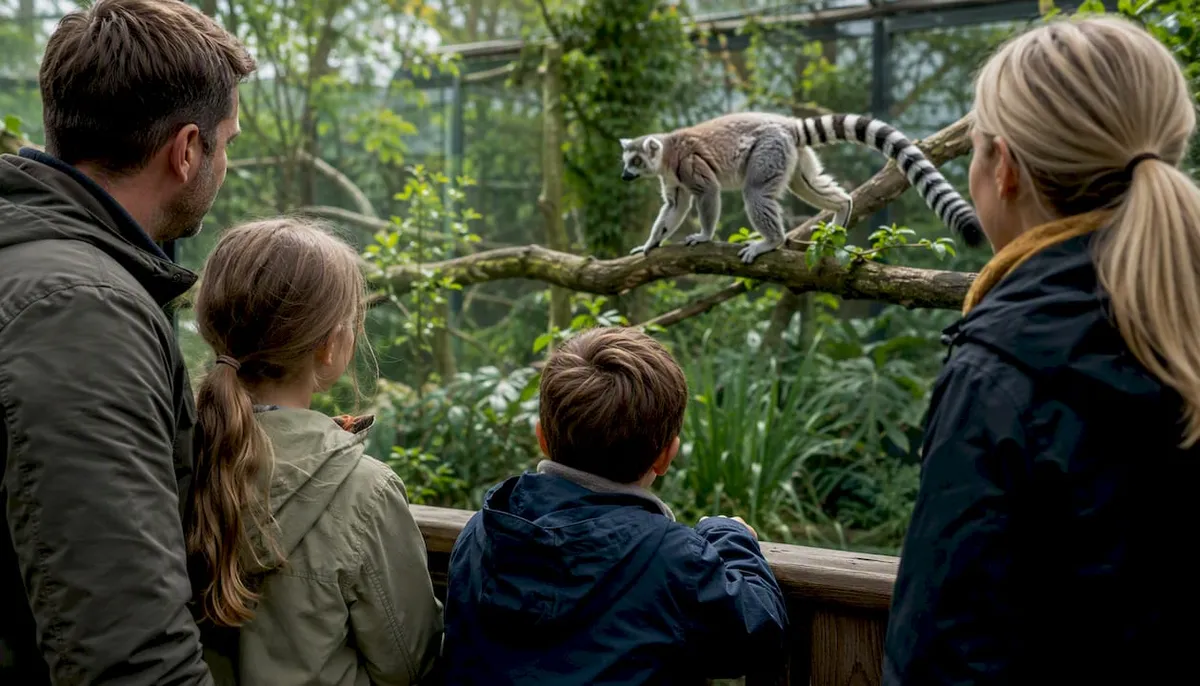
Cotswold Wildlife Park rewards a slower pace than most visitors give it. Check the daily activities page before you set off rather than hunting for a board on arrival, and plan around the fixtures: the penguin talk and feed run mid-morning and mid-afternoon, the lemur feeding talk at noon, and the narrow-gauge railway through the summer season. The Madagascan walkthrough and the reptile house both work as boltholes if it rains.
Cotswold Farm Park works on a different rhythm. It runs a real seasonal calendar — lambing through late winter and early spring, a pumpkin patch across October — alongside twice-daily bottle-feeding and the hands-on Discovery Barn. This is the pick for children under six who find the bigger parks overwhelming, and the Adventure Barn's indoor play is the reason it survives a downpour when almost nothing else here does.
Two smaller options round out the category:
- Birdland is nine acres by the Windrush with more than five hundred birds, including England's only breeding group of king penguins. The compact layout means an hour or two rather than a full day — which is the point for younger children.
- Fairytale Farm, near Chipping Norton, was designed around disabled children rather than adapted for them afterwards: push-button attractions the child controls, quiet periods with the noise turned down, and a carer admitted free. Best for under-eights, though the sensory design means older children with additional needs get as much from it. It is about nine-tenths outdoors, so treat it as a fair-weather outing.
Pro Tip: Check the website the morning of your visit if one specific encounter is the reason you are going. Schedules shift with weather and animal welfare, and nothing deflates a five-year-old faster than missing the one thing they were promised.
Castles, palaces and historic houses that don't bore the children
Grand houses have a reputation as a parents' choice. Blenheim and Sudeley both work against it, but only if you plan around the outdoors.
At Blenheim Palace the pull is the Walled Garden — the Marlborough Maze, the butterfly house and the miniature train that shuttles there from the palace for a pound each way. The interior suits ages eight and up who can manage an audio tour. The one thing to sort before you travel is the ticket: Adventure Play is sold as its own pass, so a family that buys standard admission and walks to the playground will be turned back. The butterfly house is seasonal too. Worth knowing for some families: Blenheim runs quiet play sessions on the last Sunday morning of the month.
Sudeley Castle is smaller and gentler, with ten gardens, an adventure playground and the Katherine Parr rooms and chapel. It is not a year-round option — the castle opens from mid-March to the start of November, last admission 3pm, and the playground shuts at 4.45pm, earlier than the grounds. Dogs are not allowed in the castle or gardens, only assistance dogs, which catches people out. Its winter light trail runs on selected evenings from late November, with timed entry, and tickets cannot be bought at the castle — online, by phone, or in person in Cheltenham only.
On membership: both are privately run and neither National Trust nor English Heritage admits you. They differ on Historic Houses, though, and the difference is worth pounds — Sudeley admits Historic Houses members free; Blenheim does not. Work out which properties you will genuinely visit before buying any annual card.
Before booking, check for:
- Baby-changing and accessible toilets, which vary more than you would expect between historic sites.
- Café opening hours, since some close earlier than the grounds.
- Whether pushchairs are allowed indoors or must be left at the entrance.
Active days out: the beach, the water park and the steam train
Some children need to burn energy rather than admire architecture. The Cotswolds has more water and rail than its chocolate-box reputation suggests — and the water comes with rules that are worth reading before you pack the car.
Cotswold Country Park & Beach is built around a flooded gravel pit in the Cotswold Water Park. Entry is charged per vehicle, then activities are priced on top.
The age and safety limits are the thing to get right here:
- AquaVenture, the inflatable course, is for ages six and over, above a minimum height, and users must be able to swim fifty metres unaided and pull themselves out of the water onto the course. Children aged six to ten need an adult in the water with them. It is not a toddler activity, however much it looks like one from the beach.
- Buoyancy aids are issued for AquaVenture at check-in. They are not part of boat hire. The rule on the pedalos, row boats and electric boats is supervision instead: anyone under eleven needs an adult of eighteen or over in the boat.
- Swimming is allowed only at the beach, inside the buoy line, and only when the red-and-yellow flag is flying with a lifeguard on duty. A red flag alone means no swimming. Cold-water shock is a real risk in a gravel pit even in August, so get in slowly.
- Wetsuits are required on AquaVenture when the water is cold, and can be hired on site.
- The last boat session is mid-afternoon, so an after-lunch arrival can miss it.
The Gloucestershire Warwickshire Steam Railway is the gentler option. Steam and heritage diesel services run the fourteen miles between Cheltenham Racecourse and Broadway, following part of the old Great Western main line, with stops at Toddington, Winchcombe, Gotherington and Hayles Abbey Halt so you can break the journey for lunch and pick up a later train. You spend it in a warm, enclosed carriage watching the weather go past, which makes it a fair wet-day choice — though the views across the escarpment and the Stanway viaduct are the actual point, and the platforms are exposed.
One detail that has changed: the Santa services now run as a short shuttle from Toddington rather than along the full line. Check the departure station when you book, not the one you remember.
Prettiest Cotswold villages for a short family outing
Not every day needs a ticket. Some of the best family days here cost nothing beyond fuel and an ice cream.
- Bourton-on-the-Water is the easiest village to bring children to, with the shallow River Windrush running through the middle. The Model Village — a one-ninth scale replica in the garden of the Old New Inn, listed in its own right — and the Cotswold Motoring Museum give older children something else. Note the museum closes for the deep winter.
- Bibury is the postcard version, and the hardest to park at. The village has no dedicated visitor car park, the coach bays by the bridge have been withdrawn, and the county council has been consulting on pay-and-display along The Street. Check the current arrangements before you set off rather than assuming free kerbside space.
- Castle Combe has a stream, a packhorse bridge and a car park above the village that is pay-and-display, not free. Most visitors walk down, so The Street is quiet — but it is not pedestrianised, and delivery vans and residents' cars still use lanes with no pavement. Keep small children close.
- Broadway pairs a walkable high street with the climb up to Broadway Tower, so a coffee stop turns into a half-day without moving the car.
On paddling in the Windrush: it is a Bourton tradition and the river runs only about ankle-deep through the village, but it is a working river, not a supervised bathing spot. There are no lifeguards, the bed is slippery, and storm overflows upstream can affect water quality after heavy rain — the local treatment works is still being upgraded. Keep toddlers within arm's reach, especially near the low bridges, and wash hands before eating.
Seasonal events and school holiday planning
The Cotswolds changes character with the seasons more than most regions, and matching your visit to the calendar often matters more than which attraction you pick.
- Spring brings lambing at Cotswold Farm Park, including after-dark sessions, plus Easter trails at several castles and gardens.
- Summer is outdoor theatre territory, with Westonbirt and the grander estates hosting open-air performances through the holidays.
- Autumn means Cotswold Farm Park's pumpkin patch across October and Halloween trails at the castles.
- Winter turns several estates into light-trail venues, with Santa services on the steam railway through December — from Toddington.
Families who want structured daytime activity through the holidays rather than a single day trip can look at holiday clubs such as Cotswold Active Camps, which runs teacher-led multi-activity weeks for ages five to fourteen. Its venues are in the northern Cotswolds and Cheltenham rather than region-wide, so check the location suits you.
School holidays are the busiest weeks of the year, and popular seasonal events sell out. If a Christmas light trail or a lambing weekend is the centrepiece of your trip, book the moment tickets go live.
Practical checklist and rainy-day backup plans
A good day out survives bad weather because you planned for it, not because you got lucky.
Before you leave the house, confirm:
- What the ticket actually includes — playgrounds and trails are sometimes sold separately.
- Whether the site is open at all: two on this list close for the winter.
- On-site parking, and whether it needs pre-booking in peak season.
- Baby-changing and accessible toilets, particularly at older historic sites.
- Pushchair access across the whole route, not just the entrance.
- Café hours, since some close before the grounds do.
For genuine wet weather, be honest about what is actually under a roof. Cotswold Farm Park's Discovery, Animal and Adventure barns are the strongest option on this list. Cotswold Wildlife Park's reptile house and walkthrough help. The steam railway keeps you in a carriage. Westonbirt has its Welcome Building, Silk Wood Barn and café — but the treetop walkway is open to the sky and more exposed than the ground, so save that for a bright spell. Fairytale Farm is mostly outdoors. Beyond that, the museums in Gloucester are around forty-five minutes to an hour from the central and northern Cotswolds, and indoor play centres in the larger market towns do the job.

Pro Tip: Keep a change of clothes and spare shoes in the car all season. Farm parks, beaches and riverside villages all involve mud, water, or both, whatever the forecast says.
Sample itineraries for a day or a weekend
Three plans, built for different family shapes.
- Toddler-friendly, one day. Morning at Cotswold Farm Park for the discovery barns and bottle-feeding, then a short drive to Bourton-on-the-Water for lunch and a paddle. Skip anything involving long walks or queues.
- Mixed ages, one day. Cotswold Wildlife Park for the morning and early afternoon, then Burford or a nearby village for an early dinner. The park has enough variety to hold both a six-year-old and a twelve-year-old.
- Two-day weekend. Day one at Cotswold Country Park & Beach — check the AquaVenture age limits first if that is the draw. Day two, a village morning followed by Blenheim or Sudeley, remembering Sudeley is closed in winter.
Where to base yourself depends on your anchor, and the region is wider than it looks. Cirencester works if the beach is the centrepiece — it is barely fifteen minutes away, with Sudeley about thirty-five. Chipping Campden or Stow suits Blenheim and Sudeley, at roughly forty and thirty minutes. Trying to do all three from one base means at least one drive of forty-five minutes or more each way, and Cotswold A- and B-roads run slower than the map suggests in summer.
If a downpour wrecks day two, swap the village morning for the barns at Cotswold Farm Park or a museum in Gloucester, and push the castle to the afternoon once it clears.
Planning your trip with The Cotswolds App
Turning this list into an actual day out is easier with the right map. The Cotswolds App covers thousands of places across the region, filterable by category so you can pull up the pubs, cafés and attractions near whichever one you have chosen.
A simple workflow: filter the interactive map by category near your first stop, save a shortlist of two or three lunch options, then read the visitor ratings before you commit. Because the map clusters results geographically, you can see which village or café sits closest to your afternoon attraction rather than guessing from a road atlas.
Planning a first Cotswolds trip with children
Most guides to this region oversell the chocolate-box villages and undersell the logistics that actually make or break a family day. Bibury looks wonderful in every photograph and is hard work with a pushchair by 11am on a Saturday. The attractions that consistently work are not the most photogenic ones; they are the ones built around movement, animals and outdoor space, where a meltdown does not ruin the day.
The other thing worth saying plainly: check the ticket and the calendar before you drive anywhere. The three most common ways a Cotswolds family day goes wrong are arriving at a castle that closes for winter, buying palace admission and finding the playground is extra, and turning up at a lake with an under-six who cannot go on the inflatables. None of those is bad luck. All three are on the websites.
Plan it properly with The Cotswolds App
Most families lose an hour of a precious day deciding where to eat or where the nearest toilets are — time you do not get back once the children are tired and hungry.
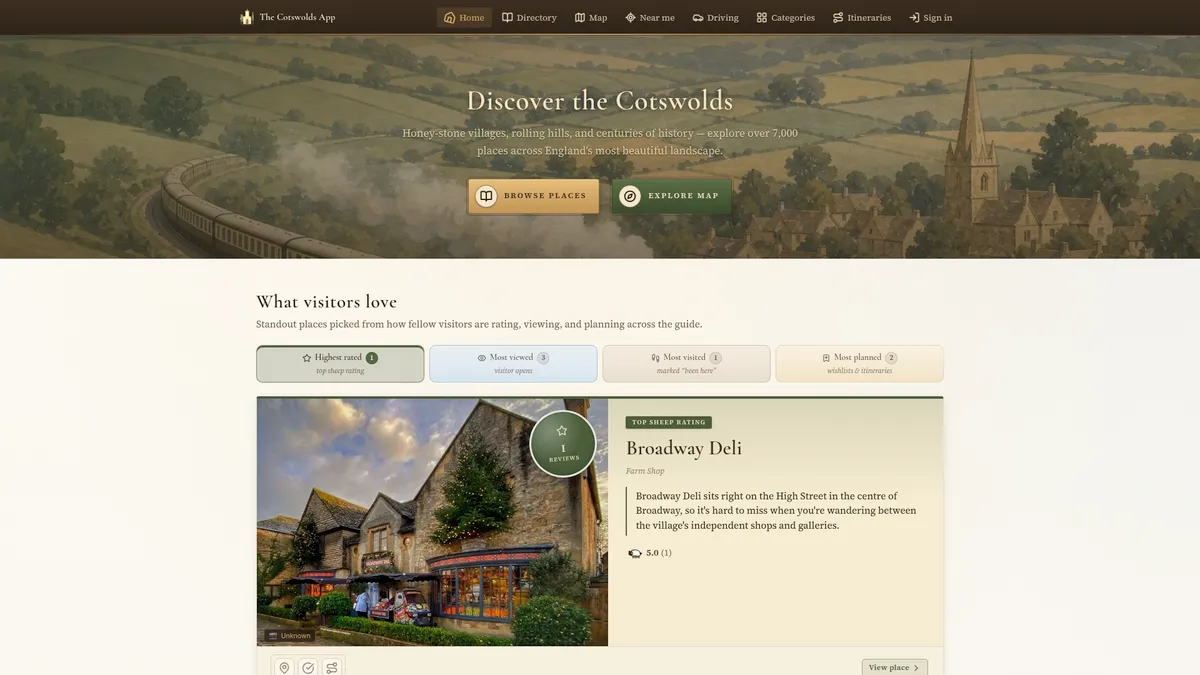
Whether you are planning an afternoon at Cotswold Farm Park or a weekend taking in Blenheim Palace and the inland beach, having every rated café, pub and play area on one map means less time deciding and more time out with the children. Install the app, or browse the Cotswolds area guides for villages like Broadway or Chipping Campden before you set off.
Sources
Checked against the attractions' own websites and official sources in September 2026. Opening times, ticket structures, prices and event details all change — confirm directly before you travel.
- Daily activities | Cotswold Wildlife Park
- Events | Cotswold Farm Park
- Lake safety | Cotswold Country Park & Beach
- Tickets | Blenheim Palace
- Opening times and prices | Sudeley Castle
- Accessibility | Westonbirt, the National Arboretum
- Santa specials | Gloucestershire Warwickshire Steam Railway
- Bibury traffic management plan | Gloucestershire County Council