
Stately Homes in the Cotswolds: Which to Visit and When
15 November 2026Last checked 15 November 2026
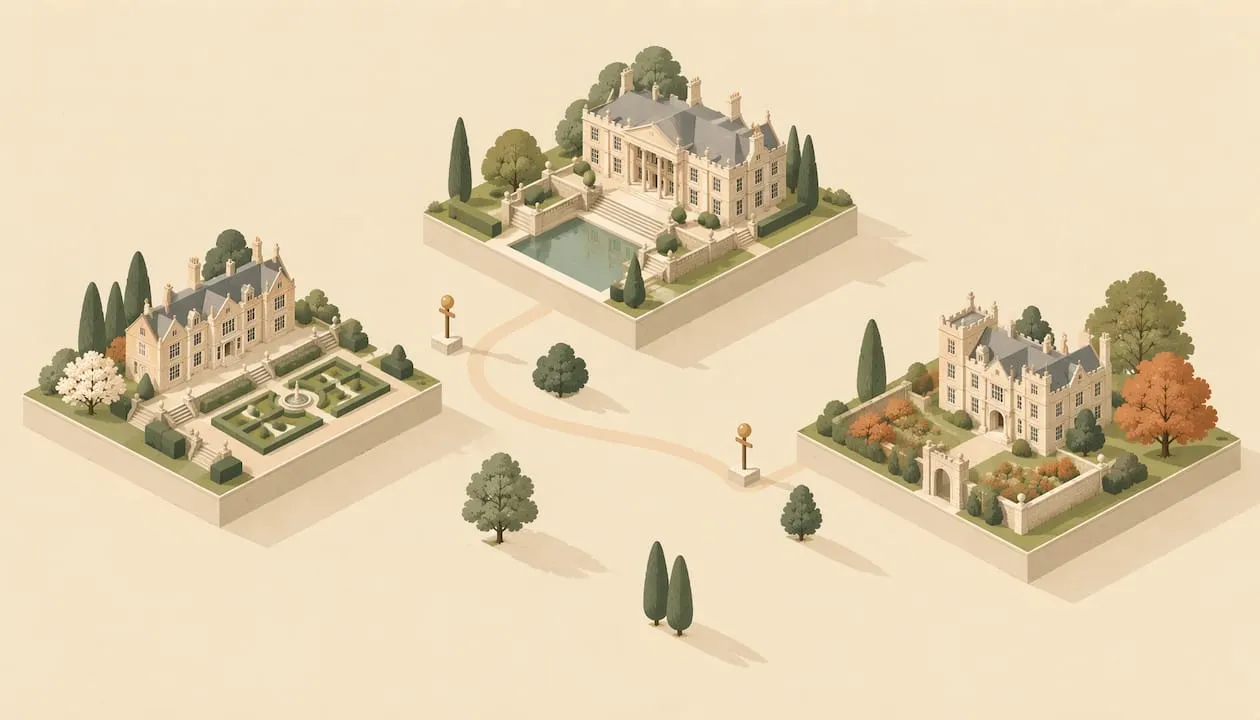
Stately homes in the Cotswolds range from a palace and a castle with a long royal history to a Jacobean manor left almost untouched for centuries and a Victorian mansion that was never finished. Sudeley Castle, Chastleton House, Chavenage, Woodchester Mansion, Dyrham Park and Blenheim Palace each offer something different. Several close for the winter or open only on certain days, so the best plan starts with the season and the kind of day you want. Once you know which houses suit you, the Cotswolds map shows the villages, pubs and walks around them.
TL;DR
- Sudeley Castle (Winchcombe) is the pick for gardens and family days, and Chastleton House (near Moreton-in-Marsh) is the pick for a quiet, unspoilt Jacobean interior.
- Blenheim Palace (Woodstock) and Dyrham Park (near Bath) sit at opposite ends of the region. Each suits a dedicated day out rather than a village-hopping weekend.
- Several houses are seasonal. Sudeley, Chastleton and Woodchester are closed for the winter, and Chavenage is by reservation only.
- Prices and opening times change. Check each house’s own page for the date you want before you set off.
- Wheelchair access varies widely, and some houses have no step-free access at all.
Table of Contents
- What counts as a stately home in the Cotswolds?
- The houses worth planning a day around
- At a glance: which house for which day
- Planning a day without wasting it
- Visiting with children
- Access and mobility
- Plan your house day in the app
- Sources
What counts as a stately home in the Cotswolds?
People use “stately home”, “manor house” and “historic house” almost interchangeably, and you will find all three in the Cotswolds. A stately home is usually a large country house built to show off a family’s wealth and standing. A manor house is the older, smaller seat of a local landowner. A historic house is any of these that is open to the public.
The region suits all of them. The area is known for its honey-coloured limestone, and wool made fortunes here. Chastleton, for example, was built by a wool merchant. Many of the houses are built in the local stone, which is why they sit so naturally in the landscape.
The Cotswolds is also big. The Cotswolds National Landscape (formerly an Area of Outstanding Natural Beauty) runs from near Stratford-upon-Avon in the north to Bath in the south, and the wider area people call the Cotswolds takes in towns such as Woodstock on its edge. Some famous houses sit right in the heart of the hills, while others are on the fringes. The notes below say which is which, so you do not spend half your day in the car.
The houses worth planning a day around
Sudeley Castle, Winchcombe
Sudeley is the easiest to recommend for a mixed group. Its official site describes ten award-winning gardens, romantic ruins, an adventure playground and daily talks and tours. That blend means the walkers, the history lovers and the children all have something to do. If ruins are the draw, our guide to Cotswolds castle ruins and heritage sites covers Sudeley alongside other sites.
The prices page currently lists adults (16+) at £24.00, seniors (60+) at £23.00, children aged 3 to 15 at £10.50 and a family ticket at £59.50 for two adults and up to three children. Under-3s go free. The same page gives a 10.00am opening, last admission at 3.00pm, the castle closing at 4.00pm and the site closing at 5.00pm, so arrive in the morning if you want both the gardens and the rooms.
Two practical points. Sudeley is closed for the winter and its site says it reopens in March 2027. Pet dogs are not allowed in the castle and grounds, though assistance dogs are welcome, and well-behaved dogs can come into the visitor centre and the Pavilion café.
Chastleton House, near Moreton-in-Marsh
Chastleton is the house for anyone who wants to feel the past rather than watch a show about it. The National Trust says the wool merchant Walter Jones built it between 1607 and 1612, and that it stayed with the same increasingly impoverished family until 1991, essentially unchanged for nearly 400 years. The Trust also says the rules of croquet were codified on its lawns. Rooms feel lived in and faded rather than polished.
The Trust lists adult entry at £16.50 with Gift Aid (£15.00 without), children aged 5 to 17 at £8.30 and a family ticket at £41.30. Members go free. On open days the house and garden open in the afternoon, from 13:00 to 17:00, with last entry to the house an hour before closing. The house and garden are closed in winter, so check the opening calendar on the Trust’s page for your date. The afternoon opening makes it a good second stop after a morning walk or a village lunch.
Finding it takes care. The Trust says to approach only from the A436 between the A44 and Stow-on-the-Wold, to use GL56 0SP for sat nav and then follow the brown signs, and not to follow signs to Chastleton village. Parking is free, about 270 yards from the house up a short, steep hill.
Chavenage House, near Tetbury
Chavenage is a 500-year-old Elizabethan manor at the centre of a 2,000-acre estate that has stayed with the same family for six generations, according to its own website. The site also notes that it played Trenwith, the Poldark family home, in the BBC drama Poldark. It is a rewarding stop if you enjoy atmosphere and small-scale tours.
Visiting works differently here. The official site’s update of 11 August 2026 says visits are by reservation only, subject to availability, with very limited opportunities to tour the house because of filming commitments. Groups pay £12 a head (minimum 21 people, or a £250 base rate for smaller groups). Individuals can be added to a pre-booked group at £12 for adults and £6 for children, plus a £5 administration charge. There is no wheelchair access. Read the current arrangements on the site before planning around it.
Woodchester Mansion, near Stroud
Woodchester is unusual because it was never finished. According to the mansion’s own site, it is a Grade I listed Victorian Gothic Revival house in a wooded valley. Building began around 1857 and stopped in the mid-1860s. Floors and ceilings are missing, walls are unplastered and windows are unglazed. It also shelters breeding colonies of greater and lesser horseshoe bats.
It is an excellent choice for architecture fans, since you can see how a great house is put together, and for anyone who likes to combine a historic visit with a woodland walk.
Plan ahead. The mansion is closed for the winter. Its site gives 2027 opening as Fridays, Saturdays and Sundays from 26 March to 31 October, 11am to 5pm, plus some bank holiday Mondays. It is not a National Trust property, although the surrounding Woodchester Park is. Visitors park at the National Trust car park in Woodchester Park, off the B4066 Selsley to Uley road, and a minibus runs down to the mansion on the hour. The site warns that the postcode can send sat navs to the wrong end of the valley, where there is no access. Check admission prices and booking on the mansion’s site.
Dyrham Park, near Bath
Dyrham Park is a country house set in parkland, run by the National Trust. It sits at the southern end of the Cotswolds, so pair it with Bath or the southern towns rather than the northern villages. House opening times, prices, parking charges and access details all vary through the year, so check the Trust’s page for the day you plan to go.

Blenheim Palace, Woodstock
Blenheim is on another scale altogether. UNESCO’s World Heritage listing records that the site was presented by the English nation to the first Duke of Marlborough in recognition of his victory over French and Bavarian troops in 1704. The palace was designed by John Vanbrugh and built between 1705 and 1722, in a landscape park later reshaped by Lancelot ‘Capability’ Brown from 1761. It was inscribed as a World Heritage Site in 1987.
It lies at Woodstock, near Oxford, on the eastern edge of the Cotswolds. Treat it as a full-day trip rather than something to squeeze between villages. Opening days and times change through the year, and parts of the palace and grounds can close for events, so check the official opening times and ticket options before you go.
At a glance: which house for which day
| House | Best for | Where it sits | Season and booking |
|---|---|---|---|
| Sudeley Castle | Gardens, families, a full day | Winchcombe, in the heart of the Cotswolds | Closed in winter, reopens March 2027 |
| Chastleton House | Unspoilt Jacobean interior, a calm afternoon | Near Moreton-in-Marsh | Afternoons on open days, closed in winter |
| Chavenage House | Small-group tours and atmosphere | Near Tetbury | Reservation only |
| Woodchester Mansion | Unfinished Gothic architecture | Near Stroud | Fridays to Sundays, late March to October |
| Dyrham Park | House and parkland near Bath | Southern end, near Bath | See the National Trust page |
| Blenheim Palace | Palace, parkland, a full day | Woodstock, on the eastern edge | See the palace’s site |
Opening patterns change from year to year, so treat the table as a starting point and confirm on each house’s own page.
Planning a day without wasting it
A good house day has one anchor and a few small extras. Choosing a single house and building the rest of the day around it works better than trying to tick off three.
- Check the season first. Several houses close for the winter, Woodchester opens only on certain days, and Chastleton opens only in the afternoon. Open the official page for the date you want.
- Pick the anchor by area. Sudeley pairs naturally with Winchcombe’s streets and nearby footpaths. Chastleton sits within easy reach of Moreton-in-Marsh and Stow-on-the-Wold. Chavenage is close to Tetbury, and Blenheim to Woodstock. Woodchester and Dyrham suit the southern half of your trip.
- Add one meal and one walk. A pub lunch and a short footpath loop turn a house visit into a proper day out.
- Keep distances honest. The northern villages are close together, but the southern half is more spread out. Folding too much into one day leaves you seeing everything briefly.
- Book where it matters. Chavenage requires a reservation. For the others, check each site’s ticket and booking guidance before you leave.
For a slower weekend away, our romantic Cotswolds guide gives a two-day loop through quiet villages.
Visiting with children
Historic houses can be a hard sell for small children, so choose the ones with something to run around in. Sudeley’s adventure playground and gardens give children somewhere to burn off energy between rooms. Woodchester’s half-built rooms and resident bats can catch the imagination of older children, and Chastleton’s garden is a calmer option for those who like to look at old things.
For a wider set of ideas, our guide to family days out in the Cotswolds explains how to build a day around one main activity. Our things to do guide adds more options for the same trip.
Dog owners should check before they go. Sudeley does not admit pet dogs to the castle and grounds. At Chastleton, dogs on leads are welcome in the car park, parkland, forecourt and stable yard, but only assistance dogs are allowed in the garden. At Woodchester, dogs are allowed in the café but not on tours, apart from certified assistance dogs.
Access and mobility
Old houses were not designed with wheelchairs in mind, and access differs a great deal. The official pages say the following:
- Chastleton House: no step-free access to the house. The house has one wheelchair for ground-floor use, and accessible parking is available closer to the house once you have collected your ticket at visitor reception.
- Chavenage House: no wheelchair access, with steps and uneven floors.
- Woodchester Mansion: a minibus runs from the car park to the mansion, and a video tour of the upper floors is available for visitors who struggle with stairs.
- Sudeley, Dyrham and Blenheim: check the access information on each official site, as routes and facilities vary by area of the house and grounds.
Call or email each house ahead of your visit to confirm what is open that day.
Plan your house day in the app
The Cotswolds App is a free guide to thousands of places across the region, from villages and pubs to restaurants, shops, places to stay and visitor attractions. Listings are built from open data and published after review. Open the Cotswolds map to see places to eat and walk near the house you have chosen, or use the directory to search by category and distance. If you are already out and about, Near me shows what is closest to you.
Some houses have their own pages, including Sudeley Castle and Blenheim Palace. Area guides such as around Winchcombe and around Woodstock gather what is nearby, and if you sign in you can save stops into an itinerary. Place pages show visitor ratings where people have left them, though many places do not have reviews yet.
You can also start from The Cotswolds App home page and browse by village, then pick a house to anchor your day.
Sources
- Sudeley Castle & Gardens
- Sudeley Castle prices and opening times
- Chastleton, National Trust
- Chavenage House
- Woodchester Mansion
- Dyrham Park, National Trust
- Blenheim Palace opening times
- Blenheim Palace, UNESCO World Heritage List