
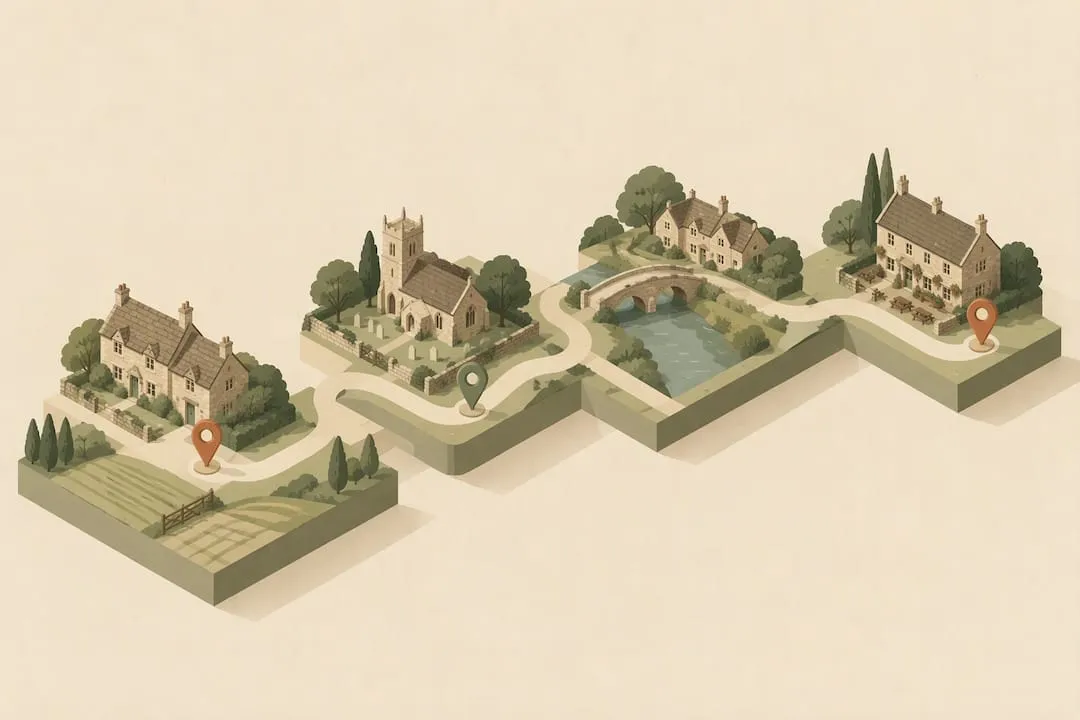
For a successful weekend in the Cotswolds, base yourself in one central market town, such as Stow-on-the-Wold or Bourton-on-the-Water, and plan a gentle two-day route of 3 to 5 nearby stops. A car gives you the most freedom to wander between honey-stone villages, though Moreton-in-Marsh, with the 801 bus on to Stow and Bourton, makes a weekend without a car workable too. Either way, resist the urge to cram in more than the pace allows.
TL;DR:
- Staying in Stow-on-the-Wold or Bourton-on-the-Water puts most of the northern Cotswolds villages within a short drive.
- Limiting each day to three to five well-chosen stops creates a more relaxed experience and prevents rushing through the region’s sights.
- Book dinner and afternoon tea ahead, especially from spring to early autumn, when popular venues fill up.
- The Cotswolds App’s map can be filtered by category, such as gardens, pubs or walks, so you can see what sits near your base.
- A car gives the most flexibility, but rural lanes are slow. Without one, plan around the 801 bus, and remember it stops earlier on Sundays.
Table of Contents
- A ready-to-use two-day Cotswolds itinerary
- Getting there and getting around
- Where to base yourself and what to book
- Villages and attractions worth prioritising
- Practical tips, seasonality and pacing
- How The Cotswolds App speeds up weekend planning
- Why slow travel makes a Cotswolds weekend memorable
- Plan your weekend with The Cotswolds App
- Sources
A ready-to-use two-day Cotswolds itinerary
Arrive on Friday afternoon and let the weekend start slowly. Check into your base, then head straight to a local pub for an early dinner or take a short stroll around the village before the light fades. There is no need to sightsee on arrival evening: settling in is the point.
Day one works well built around two villages, one in the morning and one after lunch, with something restful in between.
- Morning: visit the first village while the streets are quiet, before the day-trip coaches arrive.
- Late morning: walk a short riverside or field path near that village.
- Lunch: eat at a village pub rather than driving elsewhere.
- Afternoon: move to a second village or a garden, and book afternoon tea in advance if you want a proper sit-down version.
- Evening: return to your base for a pre-booked dinner, ideally reserved when you book your room.
Day two shifts the focus to your base town itself, plus one further stop before heading home.
- Morning: explore your base town’s market square, shops and any museum on foot.
- Midday: take a short circular walk. A loop of a mile or two from the village gives you countryside time without a long drive.
- Early afternoon: one final village or garden stop, timed to leave enough daylight for the journey home.
- Late afternoon: depart, allowing extra time if you are catching a Sunday train, and checking when the last bus to the station leaves.
If you want a more relaxed version, drop to two stops each day and give one garden or tea room a genuinely unhurried hour rather than twenty minutes. A busier variant adds an early start on day one, a third village in the afternoon, and a slightly later dinner. Both variants keep the same principle: pick a handful of places and enjoy them properly rather than rushing between postcard shots. A slow pace focused on 3 to 5 well-chosen stops a day consistently produces a better weekend than trying to see everything.
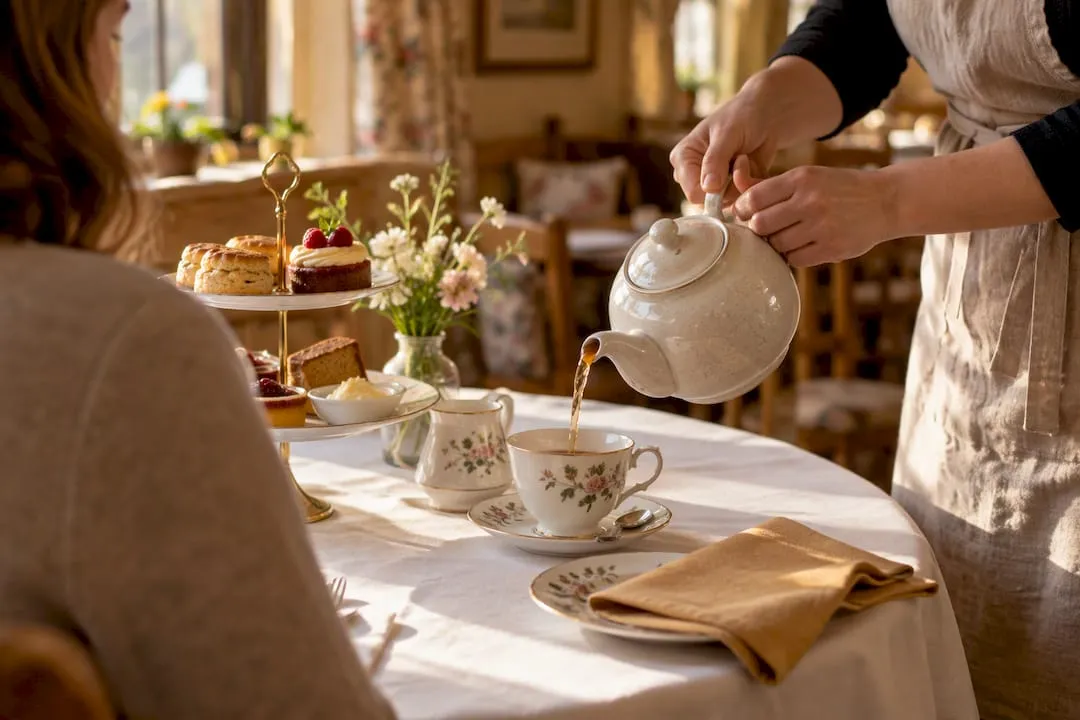
Whichever variant you choose, book Saturday dinner and any afternoon tea before you leave home. Popular tea rooms and pub kitchens fill up fast, especially from spring onwards, and a booking made on the day rarely lands you a table.
Getting there and getting around
By train, most weekend visitors use the Cotswold Line from London Paddington, which calls at Charlbury, Kingham and Moreton-in-Marsh. Kemble, on the Paddington to Gloucester line, is the station for Cirencester and the southern Cotswolds.
Moreton-in-Marsh suits a Stow or Bourton base, because the Pulhams 801 runs from the station through Stow to Bourton, hourly and seven days a week. Check the last bus back before you plan your final day: under the timetable from 3 May 2026 it leaves Bourton at 9.20pm on weekdays, 8.20pm on Saturdays and 5.20pm on Sundays. Broadway and Chipping Campden are harder at a weekend: the Stagecoach 1 and 1A to Broadway do not run on Saturdays or Sundays, so book a taxi from Moreton-in-Marsh ahead of time.
A car still gives you the most flexibility, since buses between villages are limited and taxis are often the only backup in smaller places. That flexibility comes with a catch: rural lanes are narrow and slow.
- Allow more time than a sat-nav suggests: farm traffic, on-street parking and single-track stretches all slow rural drives down.
- Village buses are limited, and Sunday services are thinner or absent, so check the timetable before relying on one.
- If you are training in, check for weekend engineering works on your line before booking tickets, since replacement bus services can add significant time.
Pro Tip: Advance train fares are cheapest booked early, but they tie you to a specific train, so buy them once your Friday and Sunday plans are fixed.
Where to base yourself and what to book
Your base shapes the whole weekend, so pick a town that matches your pace rather than the one with the prettiest photos. Stow-on-the-Wold sits where several old roads meet, including the Fosse Way, a short drive from Bourton and roughly ten miles from Broadway and Chipping Campden. Bourton-on-the-Water suits families, with its shallow river and several family attractions in the centre. Moreton-in-Marsh works well if you are arriving by train, thanks to its direct London connection. Broadway and Chipping Campden suit walkers, with the Cotswold Way passing through both.
Accommodation ranges from grand to simple, and each suits a different kind of weekend.
- A country-house hotel suits a romantic Cotswolds retreat, often with a restaurant on site so you are not driving after dinner.
- A village inn gives you a room above a working pub, usually the easiest option for a Saturday dinner booking.
- A bed and breakfast offers a more personal welcome and local knowledge, often at a gentler price.
- A self-catered cottage suits longer stays or a small group wanting space and flexibility.
- Camping or caravanning brings you closer to the landscape itself, with several sites offering easy access to walking routes; our camping and caravanning guide covers what to expect from a Cotswolds pitch.
Book your room as early as you can for a summer weekend, and confirm parking and dog-friendly policies at the same time, since older buildings in these towns often have limited space for cars and not every inn welcomes pets.
Villages and attractions worth prioritising
Not every village needs a stop, and choosing well matters more than covering ground. Bibury is worth an early or late visit to see Arlington Row without the coach crowds, followed by a short riverside walk. Bourton-on-the-Water rewards a lazier hour by the water, plus the Model Village and the Cotswold Motoring Museum if you have children with you; the museum closes over the deep winter, so check before a December or January visit. Stow-on-the-Wold’s market square is good for a browse, with antiques shops around it.
- From Broadway, a circular walk of about four miles climbs to Broadway Tower, with wide views over the Vale of Evesham. The grounds around the Tower are ticketed; the public footpaths are free.
- Hidcote, a National Trust garden near Chipping Campden, has seasonal opening times worth checking before you go. Snowshill Manor and Garden, also National Trust, uses timed entry to the house.
- Sudeley Castle, near Winchcombe, suits an afternoon when you want history alongside gardens. It closes from early November to mid-March.
- Batsford Arboretum, near Moreton-in-Marsh, is at its best in spring blossom or autumn colour. It opens daily, but can close at short notice in high winds.
Basing your weekend in the northern Cotswolds, near Stow-on-the-Wold or Bourton-on-the-Water, puts the best-known villages within a short drive. That single choice does more to shape a smooth weekend than any list of attractions.
The best-known villages are busiest from roughly 9am to 4pm on sunny summer weekends, so arriving before 9am or after 4pm buys you a calmer version of the same place.
Practical tips, seasonality and pacing
Spring and autumn give you pleasant walking weather and quieter gardens, while summer is the busiest season, when popular afternoon teas and dinners need booking well ahead. Winter is quieter still, though some attractions cut their opening hours or close entirely, so check before you plan a visit around one.
Pack for changeable weather even in summer: comfortable shoes for cobbles and field paths, a waterproof layer, and a little cash for village shops and honesty-box stalls that do not take cards. If you are driving an electric car, check charger locations near your base before you arrive, since rural charging points are still patchy.
- Book Saturday dinner and any afternoon tea as soon as you confirm your dates, particularly from May to September.
- Keep to 3 to 5 stops a day rather than stretching for one more village.
- Choose a single geographic cluster, northern, central or southern, and stay within it to avoid long cross-region drives.
Pro Tip: If in doubt, drop a stop rather than add one. An unhurried afternoon in one village beats a rushed circuit of three.
How The Cotswolds App speeds up weekend planning
A two-day plan is easier when you can see what sits near your base on one map rather than switching between search results. The Cotswolds App’s map can be filtered by category, such as gardens, pubs or walks, so unrelated listings drop out of view.
- If you sign in, build the weekend as an itinerary: add your stops, group them by day, and see the driving time between each one.
- Travelling with a dog? The map does not filter by it, but each place page shows a dog-friendly rating where visitors have left one.
- Check visitor ratings on nearby restaurants if your Saturday dinner plan falls through. Many places have no reviews yet, so treat ratings as a guide.
- Open Near me once you are in the region to see what is closest to where you are standing.
None of this chooses for you, but it narrows thousands of Cotswolds places down to the ones close enough to fit your day.
Why slow travel makes a Cotswolds weekend memorable
The best Cotswolds weekends come from lingering, not ticking off villages. An hour in one pub garden, watching the light change over the stone, tells you more about the place than four quick photo stops ever will. Quiet mornings and evenings, before and after the coach parties, show you the villages at their most themselves. If it is your first visit, Stow-on-the-Wold or Bourton-on-the-Water make a fine, forgiving base to start from.
Plan your weekend with The Cotswolds App
Once you know your base, the map, the area guides and an itinerary turn the plan into a route you can follow.
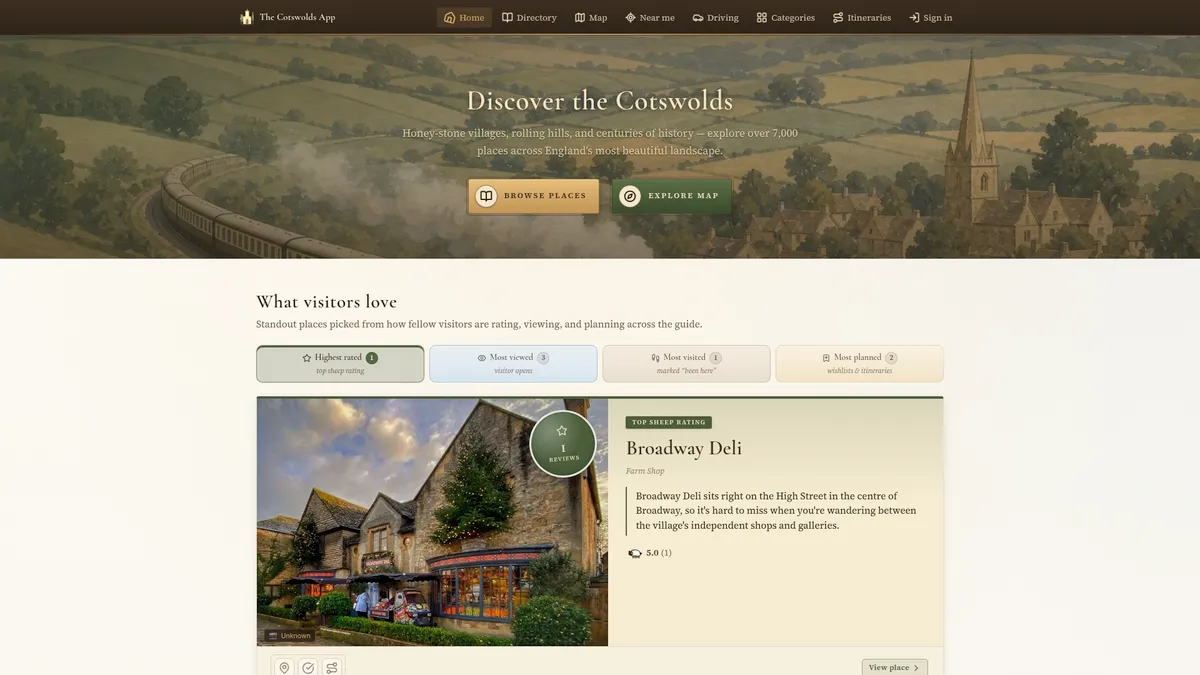
Use Near me once you have arrived to catch anything you missed, and save places to your To visit list as you go (you need to be signed in). Our area guides cover Stow-on-the-Wold, Bourton-on-the-Water, Moreton-in-Marsh, Broadway and Chipping Campden if you want a head start.
- Filter the map by category to build a realistic 3 to 5 stop day rather than an overambitious list.
- Check ratings on pubs and tea rooms near your base before booking a table.
Install the app and start planning your weekend before you set off.
Sources
- Trains to the Cotswolds — Great Western Railway
- Service 801 timetable from 3 May 2026 — Pulhams Coaches
- Hidcote — National Trust
- Booking your visit to Snowshill Manor — National Trust
- Opening times and prices — Sudeley Castle
- Opening hours — Batsford Arboretum