

Cotswold Lavender at Snowshill: When to Go and How to Plan the Visit
6 October 2026Last checked 6 October 2026
Cotswold Lavender at Hill Barn Farm, on the edge of Snowshill above Broadway, is the lavender farm most visitors to the Cotswolds mean, and July is when it is at its best. The farm opens its display field for about seven weeks each summer, usually from mid-June to the first week of August, and its own advice is that colour starts to show in mid-June, is strong by the end of the month, and peaks in July before harvesting begins around the 20th. Dates move with the weather every year, so check the farm's visiting page before you set off.
TL;DR:
- July is peak colour, with harvest starting around 20 July; the season usually runs mid-June to early August, 10am to 5pm daily, last entry 4.45pm.
- One display field of roughly 20 acres is open to walk; the rest of the 45 acres is a working crop and off limits.
- No advance tickets for ordinary visits, card payments only, free field car park, dogs on a short lead, no drones.
- The farm is remote: two miles south of Broadway, six miles from Moreton-in-Marsh station, and taxis need booking both ways.
- Pair it with Snowshill Manor next door, Broadway, or the National Trust's circular walk to Littleworth Wood.
Table of Contents
- Where the Cotswolds lavender fields are and when they flower
- What you can actually do once you’re on site
- Getting there: parking, tickets, dogs and mobility
- Photography rules and the best light for your shots
- Pairing your visit with Snowshill, Broadway and nearby walks
- Use The Cotswolds App to plan and map your lavender visit
- Background and history of lavender farming in the Cotswolds
- Different varieties of lavender grown in the fields
- Benefits and uses of lavender products
- Best months and weather considerations for visiting
- Tips for avoiding crowds and making the most of your visit
- Sources
Where the Cotswolds lavender fields are and when they flower
Cotswold Lavender sits at Hill Barn Farm (postcode WR12 7JY), on the lane that climbs out of Snowshill, two miles south of Broadway in the north Cotswolds. Brown tourist signs reading "Snowshill Lavender" point the way from the main roads. The fields look out over Broadway and the Vale of Evesham, and a viewing area at the end of the farm's woodland trail looks further still, towards the Malvern Hills.
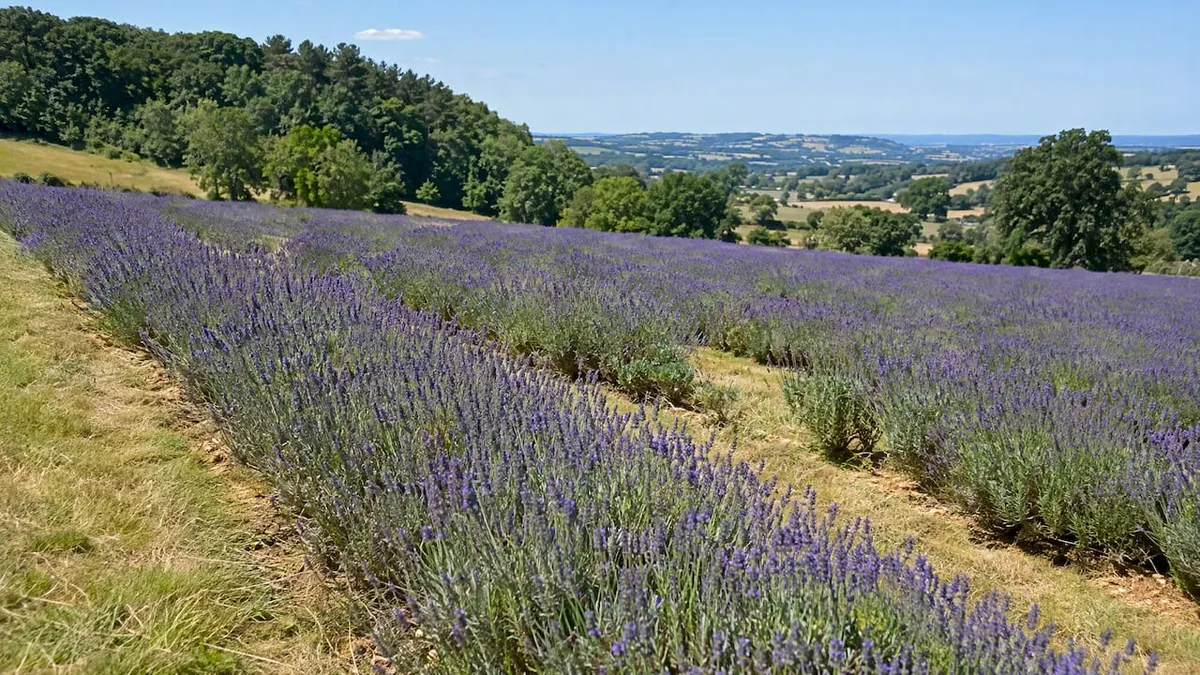
The farm's own guidance on timing is the one to trust: colour begins to show from around the middle of June, there is plenty by the end of the month, July is "undoubtedly the best time", and harvesting starts towards the end of July, usually around the 20th. Harvest takes about two weeks. The farm cuts the fields that are closed to the public first and leaves the display field as long as it can, so there is still lavender to see in the final fortnight, just less of it. In 2026 the fields closed on 5 August.
Because the window is short and weather-dependent, build in some flexibility:
- Check the farm's website for opening dates before travelling. They change from year to year.
- Follow the farm's Instagram or Facebook for photographs from the fields in the weeks before your trip; it posts updates through the season, including when colour starts to fade.
- Treat early to mid July as the target, with late June and late July as the fallbacks.
What you can actually do once you’re on site
Not every row is open for wandering. Cotswold Lavender is a commercial farm that harvests its crop for essential oil, so of its 45 acres of lavender, one display field of roughly 20 acres is open to the public, with mown grass paths between the rows. The other fields are working rows and are not accessible.
On a typical visit you can expect:
- A walk through the display field, with picnic benches set among the lavender. The farm actively encourages picnics.
- Wildflower meadows alongside the lavender, and the Beechwood Trail, a woodland trail opened in 2022 with a worksheet for children and the viewing area at the end of it.
- The Distillery Barn, which you can visit whenever the farm is open, with information boards on how the oil is made. Distillation itself runs only on harvest days, usually in the last week of July, and the farm cannot say in advance which days those will be.
- The Lavender Cabin, in the field itself, selling the farm's lavender range plus hot and cold drinks, scones, cream teas and ice cream from Gorsehill Abbey Farm at Willersey, a few miles away. The old shop and café closed in 2019; the Cabin is what replaced them.
- Lavender plants for sale in 9cm pots, only while the fields are open.
Most people find an hour or two enough to walk the rows, take photographs and visit the Cabin before moving on. The farm recommends arriving by 4pm at the latest; last entry is 4.45pm and the field closes at 5pm.
Getting there: parking, tickets, dogs and mobility
Hill Barn Farm is in a remote spot, and the farm says so itself. A car is the easiest way to arrive. The nearest station is Moreton-in-Marsh, six miles away, and the farm's advice to rail travellers is to take a taxi and to book the return journey before you set out, because taxis are hard to find in the area, especially on a Sunday. Gloucestershire's bookable Robin minibus covers Snowshill village, about half a mile's walk from the farm; see our car-free Cotswolds guide for how it works.
A few points worth planning around:
- Parking: a large grass field, free for visitors to the lavender. The gates open at 9.45am and are locked at 5.30pm, so cars must be gone by then.
- Tickets: bought on arrival, by card only. The farm does not take cash and does not sell ordinary entry tickets in advance. Entry is cheaper outside the peak flowering weeks and free for under-5s; current prices are on the farm's visiting page.
- Groups: coaches and parties of more than 15 must book with the farm ahead of time.
- Dogs: welcome in the fields on a short lead at all times, cleaned up after, and not in the children's play area. There is water for dogs by the exit next to the Cabin, but shade is limited, so the farm asks you to think twice on a very hot day. Dogs must not be left in cars.
- Toilets: temporary toilets with hand-washing, including one with disabled access.
On access, the farm's own description is the honest one: the display field has mown grass paths all round it, which many people find suitable for wheelchairs and pushchairs, but the ground slopes, so not everyone will, and some lightweight travel mobility scooters are not stable enough for the field. The Beechwood Trail is rough and uneven in places and not accessible to all. The farm asks anyone with questions to get in touch before visiting.
Pro Tip: If you are relying on a taxi, book both legs before you leave home. The farm's getting-here page lists a local firm, and a Sunday return is the journey most likely to leave you waiting at the gate.
Photography rules and the best light for your shots
Personal photography is included in the entry fee, so a camera or phone is never an issue. Two rules matter. Drones are not permitted in the lavender fields. And anyone shooting for commercial purposes, which the farm defines to include wedding and family portrait sessions, workshops and anything used to promote a business, must buy a photography pass from the farm's website in advance; the pass covers the photographer only, clients pay standard entry, and the farm charges a much higher fee to anyone caught working without one.
For the best results:
- Arrive soon after the 10am opening, or late in the afternoon, when the light is softer and the rows glow rather than glare.
- Use the rows as leading lines towards the farm buildings or the view over the Vale.
- Plain, contrasting clothing (white, cream or navy) reads better against purple than patterns.
- Stay in the display field and on the paths. Never step into or sit among the working rows, whatever the shot promises.
Pairing your visit with Snowshill, Broadway and nearby walks
A lavender visit pairs naturally with the rest of the north Cotswolds, and most people turn it into a half-day rather than a quick stop. Snowshill Manor and Garden, the National Trust property about half a mile back towards the village, is worth two to three hours for Charles Wade's crammed collections and the terraced garden. It opens later than the farm, at 11am, and manor tickets are issued on arrival for timed slots that can run out on a busy day, so do the lavender first. There is a 500-metre uphill walk from its car park to the house. Our National Trust in the Cotswolds guide has the detail.
A sensible half-day runs: lavender fields soon after opening, Snowshill Manor from 11am, then lunch in Broadway, two miles down the hill. Reverse it if you want the fields in late-afternoon light.
If you fancy stretching your legs:
- The National Trust's Snowshill Manor to Littleworth Wood circular is 3.5 miles from the parish car park in Snowshill, graded challenging by the Trust, with some steep climbs and ground that is often muddy. Allow about an hour and three-quarters. It is dog-friendly and takes in views over the Vale of Evesham towards the Malverns.
- Broadway Tower stands about a mile and a half north of the farm as the crow flies. The classic approach is the four-mile circular from Broadway village, covered step by step in our Broadway Tower walk. The tower itself is spiral stairs only, with no lift.
- Broadway to Snowshill on foot is about two and a half miles, uphill all the way on footpaths across farmland, if you would rather leave the car in Broadway.
Broadway has a good spread of tea rooms and pubs along its High Street. Parking there fills quickly in summer, so arrive early or park on the edge of the village and walk in; our Broadway guide covers the options.
Use The Cotswolds App to plan and map your lavender visit
Because the season is short and the farm sits off the beaten track, it helps to see what else is within reach before you commit to a date. The Cotswolds map shows Cotswold Lavender alongside thousands of other places across the region, and you can filter it by category, such as pubs, cafés, gardens or walks, to see what sits around Snowshill and Broadway. Each place page lists opening hours where we hold them, nearby places, and the dog-friendly and accessibility ratings that visitors have left, so you can judge a lunch stop before you drive to it.
If you sign in, the itinerary editor lets you put the farm, Snowshill Manor and a Broadway lunch in order and shows the driving route and times between them. The area guides for Snowshill and Broadway list everything we have around each village. The app installs on a phone from its install page; it is a web app, not a Play Store or App Store download.
Background and history of lavender farming in the Cotswolds
England has grown lavender commercially for a long time, but the Cotswolds crop is young. Norfolk Lavender at Heacham, founded in 1932, kept English distilling alive for much of the twentieth century. At Hill Barn Farm the Byrd family, who have farmed around Snowshill for three generations and moved to this farm in 1994, planted their first lavender in 1999 as a small diversification. The farm's own account has farmer Charlie Byrd setting out those first few hundred plants on hands and knees in the first field, not knowing whether lavender would suit the soil or survive the winters up on the hill. It did, and from that one field the farm grew to as much as 70 acres of lavender, settling at around 45 today as older plants are retired and fields are rested before replanting.
The farm distils its own oil on site, using steam from softened rainwater to separate the essential oil from the flowers. The oil is left to age for a year before use; the farm produces around 1.5 tonnes a year, which goes into its own range and is supplied to other manufacturers. Alongside the lavender it grows wheat, barley, beans and linseed, harvested after the lavender fields have closed, and in recent years has planted more than 2,000 trees and a mile and a half of new hedges.
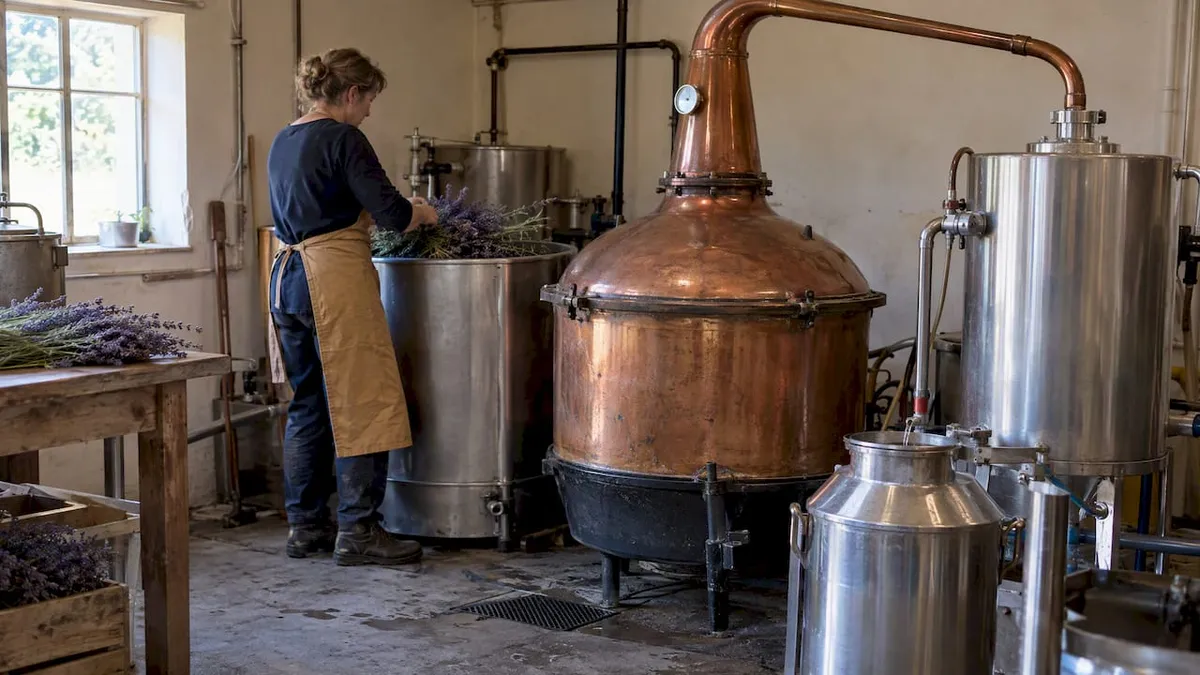
What makes Snowshill distinctive within England's small lavender scene is that it is a genuinely productive farm that also opens its fields each summer. That dual purpose shapes almost every rule on site, from the single display field to the distillery running only on harvest days.
Different varieties of lavender grown in the fields
Lavender grown commercially in England falls into two broad groups, and a working farm typically grows several varieties of each rather than a single strain. English lavender (Lavandula angustifolia) has the sweeter, less camphorous scent and is the type used for culinary and most cosmetic purposes. Lavandin, a hybrid of L. angustifolia and L. latifolia, yields more oil with a sharper, more medicinal note, which suits soaps and household products.
In the display field you will notice the colour changes row to row: some varieties lean towards deep violet, others towards a paler blue-purple or even a pink tinge. Different varieties also flower at slightly different points in the season, which is one reason the fields look different in late June and late July. A row that peaked early may be fading while a later variety nearby is just reaching its best.
Benefits and uses of lavender products
The oil distilled at Snowshill goes into a familiar range: soaps, bath and shower products, skincare and home fragrance, most of which are sold in the Cabin and online all year. Lavender has a long association with relaxation and bedtime routines, and it turns up in the kitchen too, where the farm sells lavender tea and chocolate and the Cabin serves lavender scones and ice cream. Culinary use leans on the sweeter English lavender rather than lavandin.
Buying from the farm itself means the oil in the bottle was distilled a few hundred yards from the rows you have just walked through, which is the appeal for anyone who wants a traceable souvenir rather than a generic one.
Best months and weather considerations for visiting
Mid-June to early August is the realistic window, and July delivers the richest colour. The first week or so after opening can still be more green than purple, and visits in August risk arriving after much of the harvest. The farm's photography page puts it plainly: the opening dates do not guarantee full flower for the whole period, with less colour at the beginning and end of the season.
Weather matters more than most visitors expect. A cool, wet spring pushes flowering later into July; a warm, dry one can bring the peak forward to late June. That is why the farm's own updates in the weeks before you travel are worth more than any fixed calendar date.
On the day, a dry, warm morning gives the strongest scent and colour, since lavender's fragrance carries best in warm, still air. Overcast days are perfectly pleasant, slightly less dramatic for photographs, and often quieter.
Tips for avoiding crowds and making the most of your visit
July is both the best time and, by the farm's own account, its busiest. Weekday mornings are consistently quieter than weekends, and the farm suggests that coming a little earlier in the season, in late June, is a good way to enjoy the fields with fewer people.
A few small adjustments make a real difference:
- Choose a Tuesday, Wednesday or Thursday rather than a Saturday if your schedule allows.
- Arrive within the first hour after the 10am opening, before coach parties and family groups build up through late morning.
- Walk the field first and save the Cabin for afterwards, when the early arrivals have moved on.
- Bring a picnic. The farm encourages it, there are plenty of benches, and it saves queuing for lunch in Broadway at the busiest time of day.
- Treat the show field as the crop it is: stay on the paths and keep dogs on a short lead.
Sources
- Visit Us – Cotswold Lavender (opening dates, hours, tickets, dogs, facilities)
- FAQs – Cotswold Lavender (parking, toilets, access, harvest, drones)
- Photography Policy – Cotswold Lavender
- Getting Here & Local Info – Cotswold Lavender
- Lavender Fields – Cotswold Lavender (1999 planting, acreage, display field)
- Distillery – Cotswold Lavender
- About Us – Cotswold Lavender (family farm history)
- Snowshill Manor to Littleworth Wood circular walk – National Trust
- Snowshill Manor and Garden – National Trust
- About Norfolk Lavender (founded 1932)