
Cotswold Stone: What It Is, Where to See It and What the Planning Rules Say
12 November 2026Last checked 12 November 2026
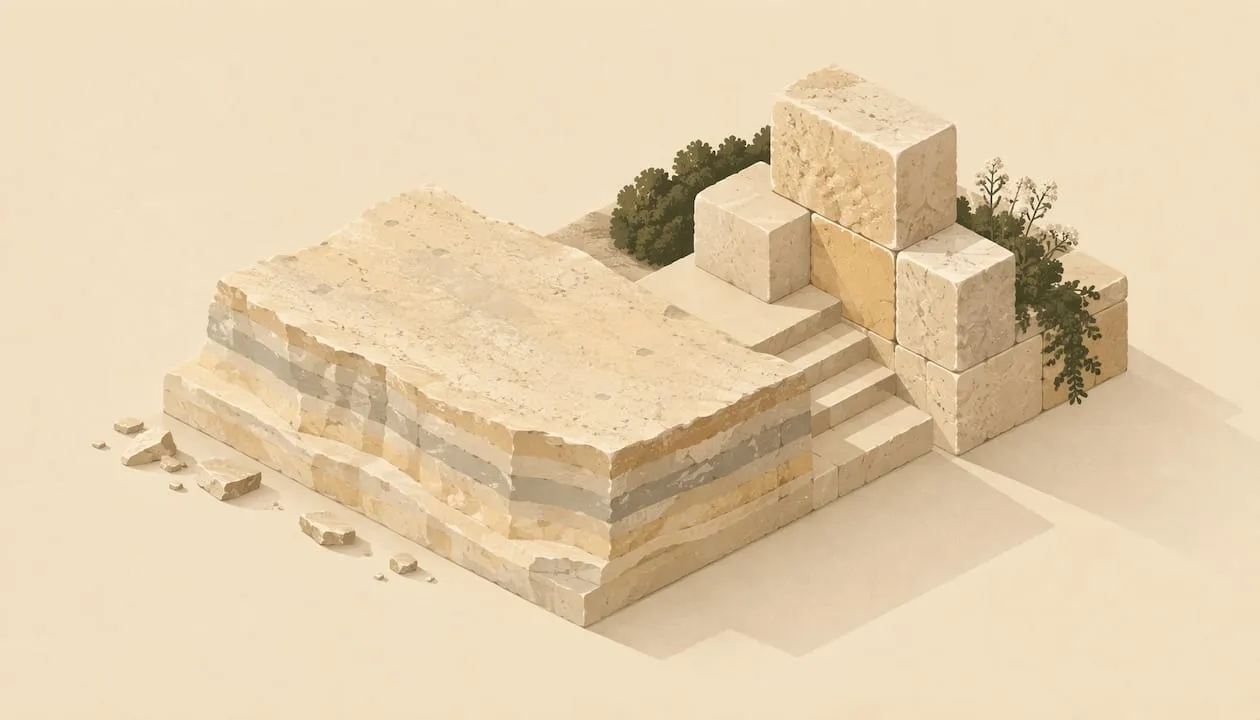
Cotswold stone is an oolitic limestone, quarried locally for centuries and used to build the walls, roofs, churches and manor houses that give the region its look. Its colour ranges from creamy white and grey to golden ochre, and it weathers to the yellow-brown that makes the villages so recognisable. This guide covers what the stone is, where to see it at its best, and what to know if you are building or repairing with it.
TL;DR
- Cotswold stone is oolitic limestone from the Jurassic rocks that run through the hills, and it weathers to a characteristic yellow-brown.
- It has been quarried since at least Roman times and used for walls, roofs, churches, manor houses and dry-stone field walls.
- Building stone and decorative “Cotswold” chippings are different products: one is for walls and roofs, the other for drives, paths and borders.
- In Cotswold District, the council’s design code favours local stone of the right colour, so check with the planning team before you start work on a listed building or in a conservation area.
- To see it at its best, walk the stone villages and look up at the roofs as well as the walls.
Table of Contents
- What is Cotswold stone?
- How Cotswold stone has been used in buildings
- Where to see Cotswold stone buildings
- Cotswold stone versus Cotswold chippings
- Buying stone for a wall
- Planning rules and Cotswold stone
- Plan a stone-spotting trip with the app
- Tips for enjoying Cotswold stone villages
- Sources
What is Cotswold stone?
The Cotswold hills are made of oolitic limestone, a rock built from small round grains that formed in warm, shallow seas only a few metres deep. The Geological Society explains that it is used as a building stone because it splits easily into blocks and is quite weather-resistant.
The local planning authority takes it seriously too. The Cotswold Design Code, part of the Cotswold District Local Plan, describes Cotswold stone as an oolitic limestone quarried locally for centuries and used for walling, roofing and other architectural elements. It calls the use of local stone the most important, unifying aspect of traditional Cotswold architecture.
That unity is what you notice when you arrive. Cottages, barns, churches and boundary walls share one material, so even a village built over several centuries hangs together.
The rock beneath the hills
The Cotswolds National Landscape says the Cotswolds stretch for nearly 60 miles and are one of the best-known sections of an oolitic limestone outcrop that runs across England from Lyme Bay in Dorset to the North Sea coast.
That limestone belt shapes more than the buildings. It gives the region its rolling wolds and the stone that has been dug from local quarries for generations.
Why it comes in different colours
Cotswold stone is not one shade. The Cotswolds National Landscape describes a range from silvery and creamy white, through greys, to a golden ochre, linked to how much iron oxide the stone contains. The Cotswold Design Code says the colour varies across the district, from lighter creams and some greyer tones in the south to deeper creams and rich honey colours further north.
Weathering plays its part as well. Farmington Stone, which quarries near Northleach, names three main influences on how the stone’s colour weathers: surface texture, how clean the surrounding air is, and how exposed the wall is to wind and weather. It says a rough field wall soon weathers to grey and attracts lichen, while a smooth vertical wall in a town mellows to honey.
How Cotswold stone has been used in buildings
People have been building with it for a very long time. The Gloucestershire Geology Trust’s Cotswolds geodiversity action plan says quarrying has been proved from Roman times, with dressed limestone used in villas such as those at Chedworth and Witcombe. Since then it has gone into walls, roofs, churches, manor houses and field walls.
The same plan picks out the Cleeve Cloud Member, more familiarly known as the Lower Freestone, as one of the most important rock units in the Cotswolds because it has been used so widely as a building stone.
Walls
Walling is the everyday use. The Design Code notes that many higher-status buildings are built of ashlar, straight-cut and finely tooled blocks laid with very tight joints, while more buildings use rubble stone, from neater squared stonework to rougher, less worked stone. Dry-stone walls, built without mortar, divide fields and line lanes.
Where mortar is used, it matters. The Design Code says mortars are traditionally lime based, and that lime mortar is a requirement in some situations, most commonly on listed buildings. The aim is a mortar that dries to a colour that blends with the stone.
Stone slate roofs
Those uneven grey-gold roofs are real stone. Cotswold District Council’s stone slate roofing guidance (April 2000) names two oolitic limestones that Cotswold stone slates are made from. Forest Marble is split by hand shortly after it is quarried. Stonesfield Slate is the name generally given to frost-split slates, originally produced near Stonesfield in West Oxfordshire.

The same guidance says stone slate roofs can still be found from Chipping Campden in the north to near Bath in the south.
Where to see Cotswold stone buildings
The British Geological Survey, in its memoir for the Moreton-in-Marsh district, says the characteristic honey-coloured oolite is much in evidence in the buildings of Broadway, Chipping Campden, Winchcombe, Bourton-on-the-Water and Cheltenham. It names Stanway House, Sudeley Castle and Batsford Park among the finer examples.
Here is a simple way to turn that into a day out:
| If you want to see | Start with |
|---|---|
| A whole town street in the local stone | Chipping Campden |
| Honey-coloured village streets beside a stream | Bourton-on-the-Water |
| A Jacobean manor house | Stanway House (open on summer afternoons only) |
| A castle and gardens | Sudeley Castle, near Winchcombe (seasonal opening) |
| Stone used in Roman times | Chedworth Roman Villa and Great Witcombe Roman Villa |
Opening times change by season, and Stanway House currently opens only on Tuesday and Thursday afternoons in June, July and August, so check each place’s own website before you set off.
Chipping Campden is a good first stop. Our Chipping Campden page shows what is nearby, and the Chipping Campden half-day guide takes you along the High Street, past the Market Hall and up to Dover’s Hill.
Reading the stone as you walk
Once you know what to look for, the stone tells you things:
- Smooth, squared, tightly jointed blocks are ashlar, which the Design Code links with higher-status buildings.
- Rougher, less worked walling is rubble stone, the more common kind.
- Grey, lichen-covered surfaces suggest a rough, exposed face, as Farmington describes.
- Uneven grey roofs on older buildings are often stone slates.
- Colour shifts from village to village reflect the north-to-south variation the Design Code describes.
Cotswold stone versus Cotswold chippings
If you search for “Cotswold stone” you will also find garden products. Aggregate merchants sell decorative chippings in a “Cotswold buff” colour for drives, paths and borders. For example, Moreton C. Cullimore lists 10–20mm Cotswold chippings in 25kg bags, 850kg bags and loose loads. These are not the same thing as walling or roofing stone.
| Building stone | Decorative chippings | |
|---|---|---|
| Form | Dressed blocks, walling stone, stone slates | Crushed or rounded chippings |
| Used for | Houses, walls, roofs, dry-stone walls | Drives, paths, borders |
Buying stone for a wall
How much stone you need depends on the wall, so ask your supplier or waller to estimate it from your own measurements. As one published rule of thumb, Smith & Sons of Bletchington says a tonne of its Cotswold dry walling stone should cover about 2 face metres of single-skin wall 1m high, or 1 face metre of double-skin wall 1m high, not counting the toppers.
If the wall belongs to a listed building or sits in a conservation area, talk to the council before you order, as the planning section below explains.
Planning rules and Cotswold stone
If you are building, extending or repairing in Cotswold District, the stone is not just a style choice. The Cotswold Design Code says it is a material consideration in planning decisions and carries considerable weight. It says the use of traditional local materials, most notably natural stone, helps contemporary developments sit in harmony with their surroundings, and that the colour chosen must suit the locality.
A few examples of what local guidance says:
- Colour matching. The Stow on the Wold and the Swells Design Code says new buildings in the Stow Conservation Area should use a colour of Cotswold stone already present on one or more listed buildings there, and that alterations and extensions should match the colour of the main building.
- Mortar. The district Design Code says lime mortar is a requirement in some situations, most commonly on listed buildings.
- Roofing. The council’s stone slate guidance says substitutes such as fibre-resin artificial slates, concrete tiles and reconstituted stone are inappropriate alternatives to real stone slates and are not suitable for historic buildings.
These documents cover Cotswold District. Parts of the Cotswolds fall in other council areas, such as West Oxfordshire, Stroud and Bath and North East Somerset, which publish their own guidance. If your property is listed, or sits in a conservation area, speak to the planning team at your own council before ordering stone. Rules differ between councils, parishes and individual buildings, so the council is the right place for a decision about your own project.
Plan a stone-spotting trip with the app
The Cotswolds App is a free guide to thousands of places across the region, from villages and churches to pubs and cafés. On the map you can switch categories on and off, and the directory lets you search by name or category and narrow the results to a distance around you. If you sign in, you can save the villages you want to see to an itinerary.
Our listings are built from open data and published only after review, so treat opening times there as a starting point and check with the venue. You can also install The Cotswolds App on your phone before you set out. Staying over? Our camping and caravanning page covers sites in the region.
Tips for enjoying Cotswold stone villages
- Go early or late. Low sun shows off the colour of the limestone, and the busiest streets are calmer.
- Look up. Stone slate roofs are easy to miss when you are watching the shop windows.
- Follow a footpath. Dry-stone walls line many of the lanes and fields between villages.
- Respect the walls. Dry-stone walls are held together only by the way the stones are fitted, so do not climb on them.
- Combine it with a stop. Our things to do around Chipping Campden page is a good place to find lunch nearby.
Sources
- Geological Society: Limestone hills, Cotswolds
- Cotswolds National Landscape: Geology of the Cotswolds
- British Geological Survey: Geology of the Moreton-in-Marsh district
- Cotswold District Council: Cotswold Design Code (Local Plan Appendix D)
- Cotswold District Council: Cotswold stone slate roofing guidance (2000)
- Stow on the Wold and the Swells Neighbourhood Plan Design Code
- Gloucestershire Geology Trust: Cotswolds geodiversity action plan
- Farmington Stone: Technical information
- Stanway House: Opening times
- Moreton C. Cullimore: Aggregate details
- Smith & Sons (Bletchington): Cotswold dry walling stone