
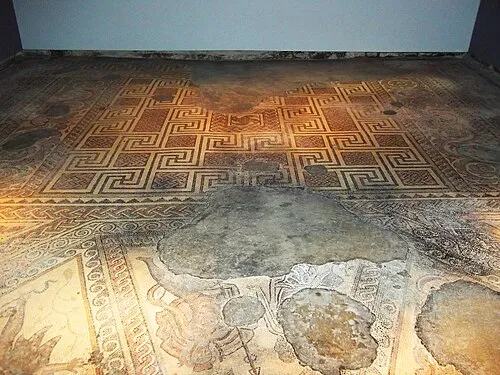
📷 Photo by Pasicles · Public Domain · Wikimedia Commons
This Roman villa gives you one of the clearest windows into how Britain's wealthy lived during the later imperial period.
Opening hours
- Wed–Sun
- 10:00–16:00
- Mon–Tue
- Closed
Built and developed across three centuries from the 2nd to the 5th centuries, it reached its height in the 4th century as a substantial courtyard villa belonging to someone of real importance.
What makes Chedworth remarkable is how much survives. You can walk through an actual dining room where the mosaic floor still lies in place, and explore two separate bathing complexes—one designed for steam, one for dry heat—that tell you everything about the comfort and status of the inhabitants. The layout around a central courtyard, typical of grand Roman country estates, remains perfectly legible on the ground today.
The site was discovered by chance in 1864 and has been carefully preserved ever since, now managed by the National Trust. They've added protective structures and modern facilities thoughtfully, enhancing rather than obscuring the archaeology, so you can genuinely understand what you're seeing rather than puzzle over scattered stone fragments.
The villa sits near Chedworth village in Gloucestershire, positioned between Cirencester and Cheltenham. It's far enough from main roads to feel genuinely secluded, yet close enough to other Cotswolds attractions that you can easily combine a visit with nearby market towns. Set aside around two hours to really absorb the picture of Roman domestic life as it existed here fifteen centuries ago.
Visitor reviews
Every review has a sheep rating. If you have dogs on your account, you can add an optional dog-friendly paw rating when you post.
Photos
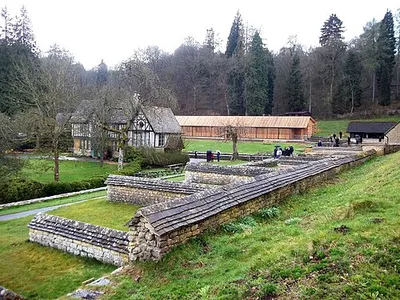
Pasicles · Public Domain · Wikimedia Commons
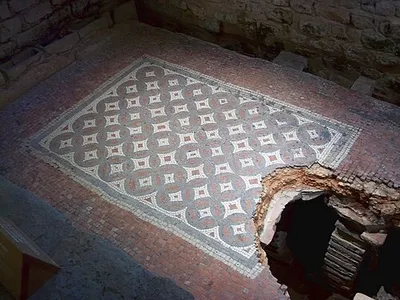
Pasicles · Public Domain · Wikimedia Commons