
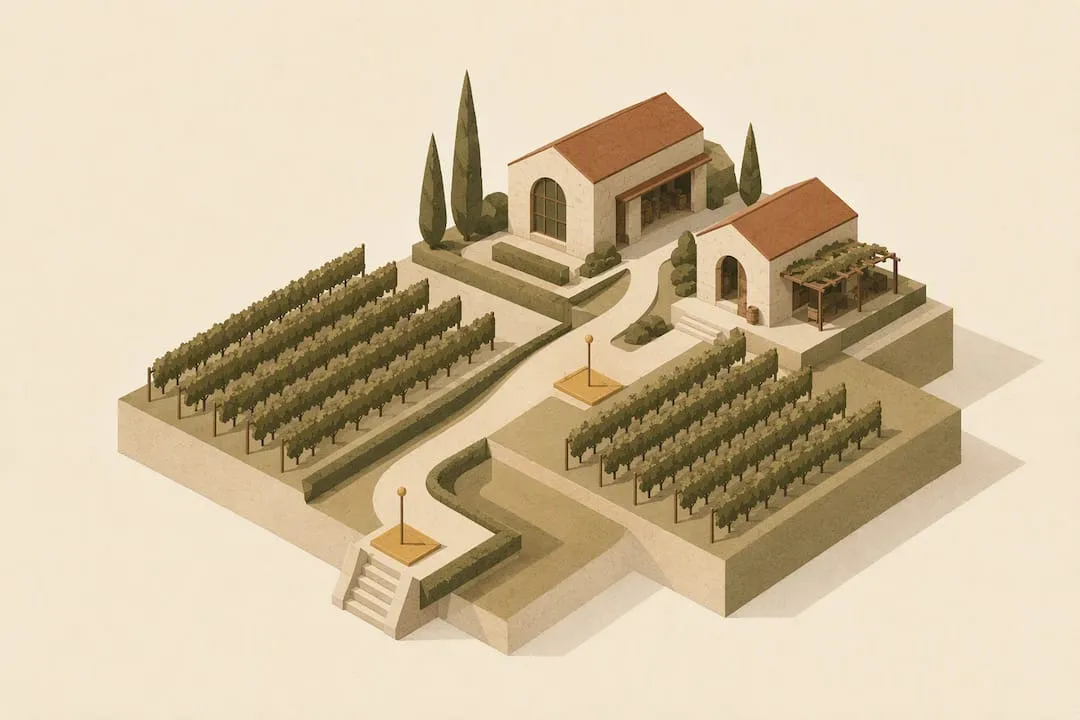
For a sparkling wine tour, book Dryhill Vineyard in Cheltenham; for a full weekend with hospitality, Three Choirs Vineyard is worth the drive west of the Severn; and for a straightforward cellar-door tasting, Woodchester Valley Vineyard near Stroud is hard to beat. Whichever you choose, check the vineyard’s calendar and pre-book, since the best dates fill up fast between April and October.
TL;DR:
- Vineyard tours and tastings in the Cotswolds are seasonal, mainly from April to October, with the busiest times in September and October during harvest weekends.
- Booking at least two to three weeks in advance is necessary for weekends, especially for popular sites like Dryhill and Three Choirs, which operate on set dates or specific schedules.
- The region’s wines are predominantly sparkling from Champagne grapes, with still wines like Bacchus and rosé also widely available, and quality linked to limestone soils and south-facing slopes.
- Visitors can choose between short vineyard walks, seated tastings, or full experiences combining food and longer visits, often with varying prices and booking requirements.
- The Cotswolds App helps optimize planning by mapping vineyards, showing opening hours, and identifying nearby pubs and villages for a complete day out.
Table of Contents
- Which vineyards Cotswolds visitors should shortlist first
- What do vineyard tours and tastings actually include?
- When do Cotswold vineyards run tours, and how far ahead should you book?
- How to choose the right vineyard for your visit
- Pairing a vineyard visit with the rest of the Cotswolds
- How The Cotswolds App helps you plan a vineyard day out
- The history behind the Cotswolds’ vineyards
- The grapes and wines you’ll actually taste
- Why the Cotswolds’ climate and soil suit vineyards
- Wine festivals and events worth building a visit around
- Organic growing and sustainability in the region
- Matching an itinerary to your visit
- Plan your route with The Cotswolds App
- Sources
Which vineyards Cotswolds visitors should shortlist first
The Cotswolds is a small but long-established wine cluster — a couple of per cent of England’s planted area, against the three-quarters held by the South East — but it is led by one of the country’s oldest commercial vineyards. The sites below cover most of what a first-time visitor wants: tours, tastings, and somewhere pleasant to linger afterwards.
- Woodchester Valley Vineyard (near Stroud): The largest vineyard holding in the Cotswolds, and a single-estate producer — 58 acres spread across Amberley, Woodchester and Stonehouse rather than one contiguous block. Cellar door and two tour tiers, the Classic Vineyard Tour & Tasting at £30 and Premium Vineyard Tour & Wine Tasting at £40. A dependable first stop for anyone wanting a proper guided walk through the vines.
- Dryhill Vineyard (Cheltenham): Known for traditional-method sparkling wine made with minimal intervention and extended lees ageing, which gives its fizz a depth that punches above its size. Tours run on set dates only.
- Three Choirs Vineyard (Newent): Strictly speaking not a Cotswolds vineyard — it sits west of the Severn on the edge of the Forest of Dean, roughly an hour from Stow — but it earns the detour. England’s oldest commercial vineyard, planted in 1973, with on-site lodges, a restaurant, and a weekend self-guided tasting and lunch from £45 per person, on top of which a £25 per person minimum food spend applies. Built for a slower, overnight visit rather than a quick stop.
- Poulton Hill Estate (near Cirencester): Sits on the same limestone slopes credited with the region’s viticultural promise, producing still and sparkling wines with a genuinely local character.
- Little Oak Vineyard (near Chipping Campden): A small, family-run plot growing Siegerrebe and Seyval Blanc, for visitors who prefer an intimate tasting — about 90 minutes, £25 a head — over a coach-party atmosphere. Tours run only at certain times of year and sell out, and at the time of writing the vineyard says it is closed to visits while it tends the vines, so check before you build a day around it.
- Larkhill Vineyard (Tetbury): Five acres planted in 2018, the youngest site here, within walking distance of the town — traditional-method sparkling alongside still wines.
- Deer Park Wines (Eckington, on Bredon Hill): A boutique producer on the Cotswolds’ detached north-western outlier, focused on quality over volume — the sort of bottle you won’t find on a supermarket shelf.
- Bow in the Cloud (Garsdon, near Malmesbury): A small Wiltshire planting on the southern fringe, growing Bacchus, Schönburger and Seyval Blanc. The name is a biblical pun rather than a weather note: the hamlet is called Noah’s Ark, and when a 1982 Sunday Times readers’ competition set out to rename the house, “Bow in the Cloud” won — “I do set my bow in the cloud”, the rainbow of Noah’s covenant. Its Cloud Nine is named for the ninth pair of crows aboard the Ark. Tour dates are closed until spring 2027.
- Quoins Organic Vineyard (Little Ashley, near Bradford-on-Avon): On the far southern edge, closer to Bath than to any Cotswold town, and Soil Association certified — one of only around six organic vineyards in the UK. Tours run in July and August only.
Between them, these nine cover the full range: big commercial cellar doors, tiny family plots, and organic growing in between. One — Three Choirs — sits well outside the Cotswolds proper and is flagged as such: worth the drive, but not a short hop from Stow.
What do vineyard tours and tastings actually include?
Most Cotswold wineries offer some version of four formats, and knowing which one you’re booking saves disappointment on the day.
- A short vineyard walk and tasting: usually 45 to 90 minutes, guided through the rows with a handful of wines to taste at the end.
- A cellar-door tasting only: no walk, just a seated flight of wines, often the cheapest and quickest option.
- A premium paired tasting: longer, more wines, sometimes matched with local cheese or charcuterie.
- A self-guided tasting with lunch: you explore at your own pace, then sit down to eat.
Price snapshot: Woodchester Valley charges £30 for its Classic Vineyard Tour & Tasting and £40 for the Premium version, while Three Choirs runs a weekend self-guided tasting and lunch from around £45 per person, served Saturdays and Sundays between 12 and 2pm, with a £25 per person minimum food spend on top — so budget above the headline figure.
Most vineyards take bookings through their own website, and a few also accept phone reservations for larger groups. Popular weekend slots, particularly through summer, sell out weeks ahead, so treat online booking pages as the first port of call rather than a backup plan.
When do Cotswold vineyards run tours, and how far ahead should you book?
Cotswold vineyards work to the growing season, and most tastings run between April and October, with harvest weekends in September and October often the busiest and most atmospheric time to visit. Outside that window, several cellar doors close entirely or switch to by-appointment only, particularly the smaller family-run sites.
- Book weekends at least two to three weeks ahead, since Saturday and Sunday slots go first.
- Check each vineyard’s own calendar directly, because some, like Dryhill, run tours only on specific set dates rather than a rolling weekly schedule.
- Confirm the cancellation policy before paying, particularly for premium or paired tastings that carry a higher upfront cost.
Pro Tip: Midweek visits, especially Tuesday to Thursday afternoons, tend to have smaller groups and more relaxed staff who’ll happily talk you through the vines for longer than a Saturday timetable allows.
How to choose the right vineyard for your visit
Match the vineyard to what you actually want from the day, not just the nearest postcode.
- Tasting style: a quick flight suits a cellar-door-only visit; a full flight with food suits Three Choirs or Woodchester Valley.
- Visit length: an hour for a short stop, half a day if you want the walk and lunch.
- Food and lodging: only a handful, like Three Choirs, offer on-site accommodation.
- Family and dog-friendliness: check ahead, as policies vary widely between sites.
- Accessibility: vineyard terrain is often uneven, so ask before booking if mobility is a concern.
- Cost: pricing varies depending on the experience and vineyard; please check individual vineyard websites for current details.
Ask each vineyard three things before booking: what’s included in the price, whether dogs are welcome, and what happens if the weather turns.
Pairing a vineyard visit with the rest of the Cotswolds
A vineyard visit rarely needs to stand alone. Three Choirs works well as an overnight base if the drive west suits you, with on-site lodges and a restaurant that turn a tasting into a proper weekend break. Woodchester Valley sits close enough to Stroud’s market town pubs for an easy lunch afterwards, and Little Oak Vineyard pairs naturally with a wander around Chipping Campden. Dryhill suits a day that also takes in Cheltenham. Parking is free at most sites but limited at smaller vineyards, so arrive close to your booked slot rather than early.
How The Cotswolds App helps you plan a vineyard day out
The Cotswolds App maps thousands of places, filters them by category, and offers area guides. Useful for checking opening times, plotting several vineyards in one day, or finding a nearby pub afterwards.
The history behind the Cotswolds’ vineyards
Commercial winemaking in the Cotswolds is younger than the honey-stone villages that surround it. Most of today’s vineyards were planted from the 1990s onward, as English wine shifted from a curiosity into a serious industry. Three Choirs, one of the earliest and largest, helped establish the region’s reputation well before Cotswold wine had any national profile.
The real turning point came in the 2000s and 2010s, as warming average temperatures made ripening classic Champagne grape varieties genuinely viable this far north. What began as a scattering of hobbyist plots on south-facing slopes grew into a recognised wine region with its own identity, distinct from the better-known vineyards of Kent and Sussex.
Growth has accelerated further in the last decade. Newer plantings like Larkhill Vineyard and organic-focused sites such as Quoins Organic Vineyard reflect a second wave of growers drawn by the same limestone slopes that first attracted the pioneers, but with a sharper focus on quality and environmental farming from day one.
That history matters on a visit because it explains the mix you’ll find. Cellar doors range from decades-old family businesses to vines barely old enough to produce a full harvest, and the tasting room conversation often reflects exactly where each vineyard sits on that timeline.
The grapes and wines you’ll actually taste
Expect still wine here as much as sparkling. The three Champagne grapes — Chardonnay, Pinot Noir and Pinot Meunier — lead at Dryhill and appear at Woodchester and Deer Park, but the regional picture leans on cool-climate Germanic crossings and hardy hybrids: Bacchus above all, alongside Seyval Blanc, Phoenix, Orion and Siegerrebe. That is what separates these vineyards from the Champagne-style chalk of Kent and Sussex. Traditional-method production, where the second fermentation happens in the bottle rather than a tank, is standard at quality-focused producers, and Dryhill’s approach of minimal intervention with extended lees ageing is a good example of the technique taken seriously.
Still wines lean on cooler-climate varieties suited to a shorter growing season. Bacchus is the standout white grape across the region, producing aromatic, slightly grassy wines often compared to a restrained Sauvignon Blanc. Solaris and Seyval Blanc appear too, both bred specifically to ripen reliably in marginal climates.
Reds are rarer and generally lighter than visitors expect, since the Cotswolds’ growing season struggles to fully ripen thicker-skinned red varieties. Rosé, often made from Pinot Noir with limited skin contact, fills that gap nicely and turns up on most tasting flights.
Expect a tasting to move from a crisp Bacchus or Solaris through to a rosé, finishing on a traditional-method sparkling wine, roughly mirroring how each vineyard sequences its own flights.

Why the Cotswolds’ climate and soil suit vineyards
The Cotswolds’ limestone bedrock is the region’s real advantage. That free-draining, alkaline soil mirrors the geology of Champagne itself, and growers including Poulton Hill Estate and Dryhill point to it as a key reason local wines can compete on quality with more established English regions.
South-facing slopes matter just as much as the soil beneath them. Vines planted on these aspects catch more direct sun through the growing season, which helps grapes reach the sugar levels needed for balanced wine in a climate that’s still cooler and shorter than northern France.
Rainfall and frost remain the main challenges. A wet August can dilute flavour just before harvest, and a late spring frost can wipe out a season’s yield on lower-lying plots, which is why many vineyards deliberately choose higher, better-drained ground even when it makes the vines harder to tend.
None of this needs a science lesson to appreciate on a visit. Ask any grower why their sparkling wine tastes the way it does, and limestone and south-facing slopes will come up within the first minute.
Wine festivals and events worth building a visit around
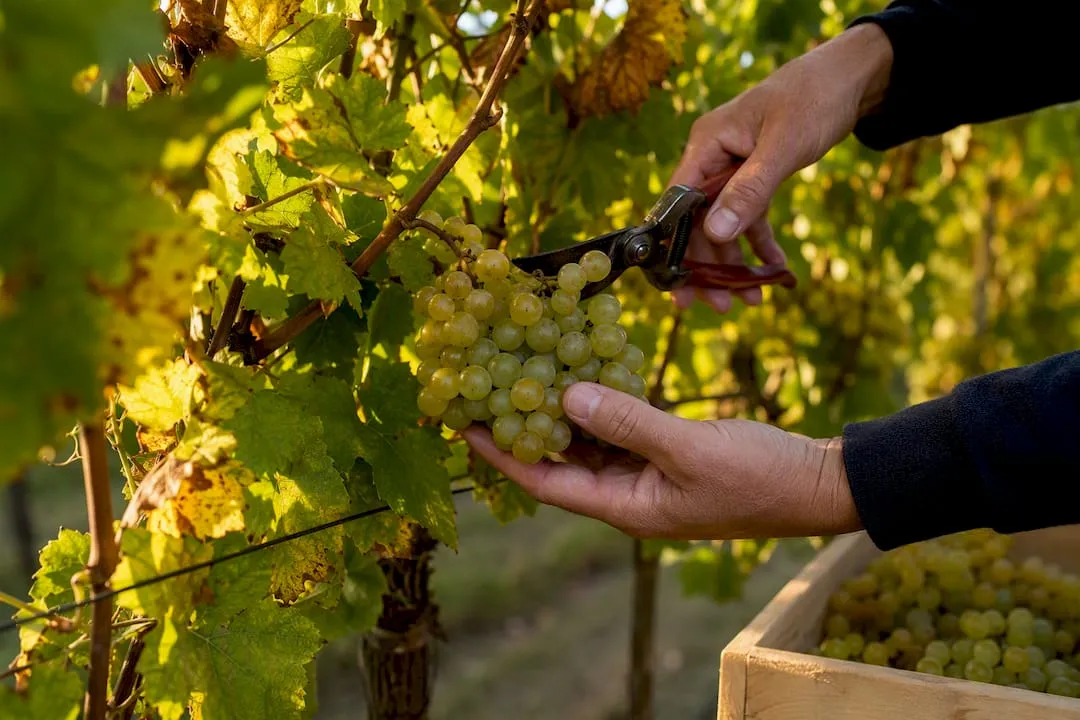
Harvest weekends in September and October are the single best reason to time a visit deliberately rather than turning up whenever suits. Several vineyards open specifically for harvest events, sometimes letting visitors watch or even help with picking, which turns a standard tasting into something closer to a proper day out.
Beyond harvest, individual vineyards run their own calendar of themed tastings, live music evenings, and food-and-wine pairing nights through the summer months, though these tend to be smaller, single-site events rather than region-wide festivals. Dryhill’s approach of running tours only on set dates is a useful reminder that some of the best experiences are the least frequent, so it pays to check individual event listings well ahead of a summer trip rather than assuming you can turn up on a whim.
Organic growing and sustainability in the region
Quoins Organic Vineyard, on the southern edge near Bradford-on-Avon, is the clearest example of chemical-free growing within reach of the region, farming without synthetic pesticides or fertilisers, which shapes everything from soil health to how the vines are pruned. That approach demands more manual labour and closer attention to the vines through the season, but many growers argue it produces a more distinct sense of place in the finished wine.
Elsewhere, sustainability tends to show up in smaller, less headline-grabbing ways: cover crops planted between vine rows to protect soil and support insect life, reduced-spray regimes even at vineyards that aren’t formally certified organic, and a general shift towards minimal intervention in the winery itself. Dryhill’s traditional-method winemaking, built around patience rather than shortcuts, reflects that same philosophy even without an organic label attached to it.
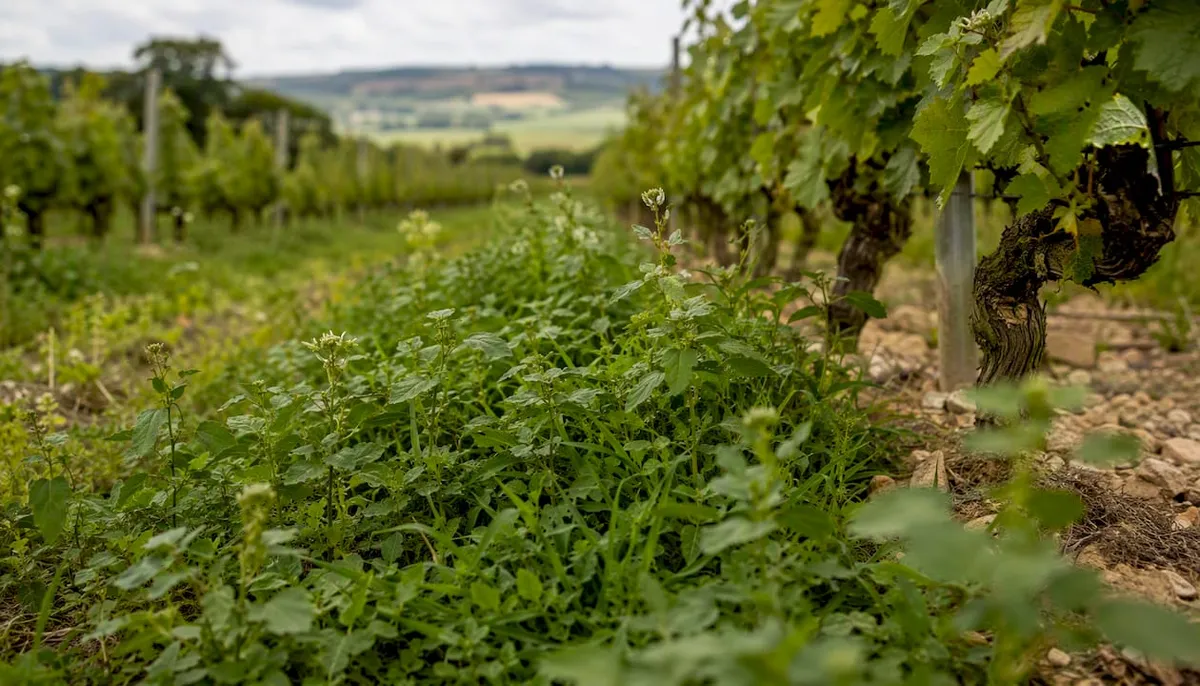
Visitors curious about this side of winemaking should simply ask during a tasting. Most Cotswold growers are small enough that the person pouring your wine is often the person who grew it, and they’re usually glad to talk through exactly how hands-off, or hands-on, their approach to the vines really is.
Matching an itinerary to your visit
A day-tripper should aim for one vineyard and a village pub afterwards. A romantic weekend belongs at Three Choirs, booked well ahead. A wine-focused trip means two vineyards in a day, timed around each one’s actual opening hours rather than assumption.
Plan your route with The Cotswolds App
Vineyard opening hours shift with the seasons, and working out which cellar doors are open on the same weekend you’re free can eat into the time you’d rather spend tasting wine. The Cotswolds App solves that by mapping vineyards alongside the pubs, walks, and villages around them, so you can filter by category and build a realistic route before you set off, rather than discovering a closed cellar door on arrival.
If you’re planning a day that takes in more than one vineyard, or want to slot in lunch somewhere decent afterwards, the interactive Cotswolds map is the quickest way to see everything nearby in one view. Open the map, drop in the vineyards on your shortlist, and fill in the gaps with a walk or a village stop before you go.
Sources
- Book your visit – Woodchester Valley Vineyard
- Wine Tasting at Three Choirs Vineyard | Gloucestershire
- Discover Dryhill cottage vineyard — Visit Cheltenham
- Dryhill Wine