
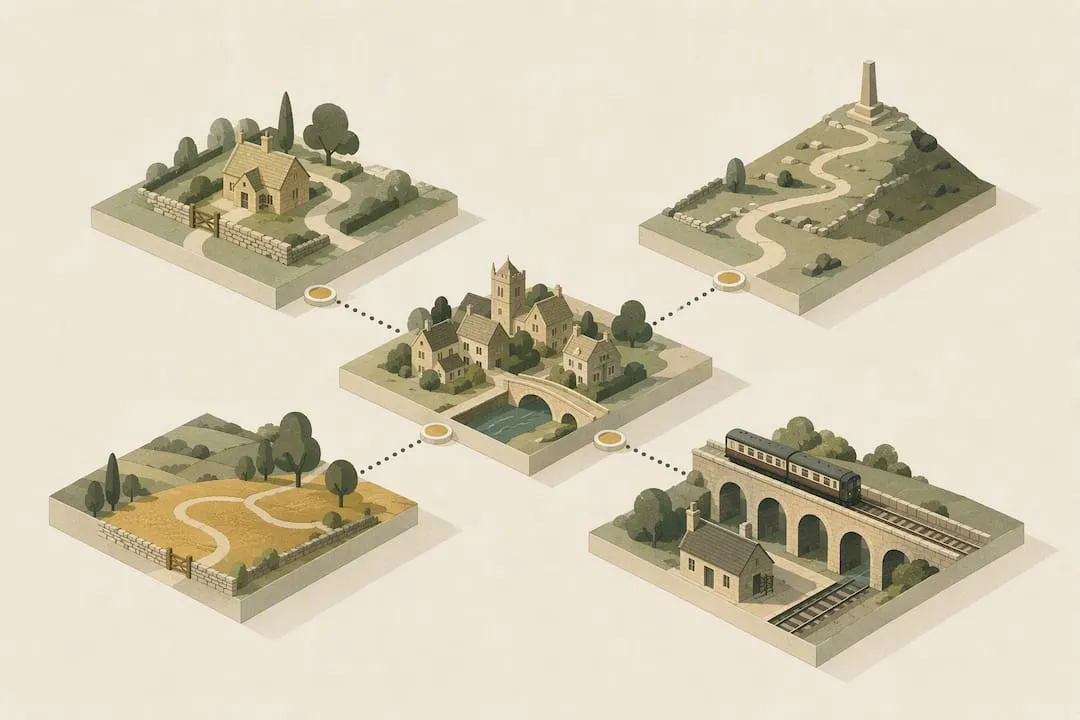
For half-day valley loops, base yourself in Bourton-on-the-Water or Moreton-in-Marsh. For traffic-free family riding, the Cotswold Water Park or the Stroud Valleys give you flat, quiet miles. For a proper weekend away, the Cotswold Line corridor lets trains carry you between stages. Whichever you choose, honey-stone villages and gently rolling wolds are never far from the next turn.
TL;DR:
- The Cotswold Line corridor offers a versatile, rail-supported route of about 77 miles suitable for 2 to 3 days, with stations roughly every 10 miles.
- Valley loops like Windrush and Bourton are gentle, family-friendly rides of 2 to 3 hours, with mostly tarmac surfaces passing through picturesque honey-stone villages.
- Off-road options such as the Stroud Valleys Trail provide easy, traffic-free cycling suitable for children and nervous riders, but conditions can become uneven after rain.
- For scenic climbs, the Cleeve Hill and Cheltenham escarpment loop delivers a strenuous 30km ride with stunning panoramic views, best suited for experienced cyclists.
- Planning logistics, including train bookings, route downloads, and suitable bikes, is essential to maximize safety and enjoyment, especially when extending rides over multiple days.
Table of Contents
- Quick picks: the best cycle routes in the Cotswolds by rider type
- Five Cotswolds cycle routes worth building a day around
- How to plan a Cotswolds bike ride: trains, maps and bike choice
- Where to base yourself for the best Cotswolds cycling
- Safety, etiquette and what to pack
- Planning routes with The Cotswolds App
- Accommodation options for multiday cycling tours
- Local rules and cycling etiquette in the Cotswolds
- Points of interest along the way
- Weather and the best time of day to ride
- Choosing between a valley loop and an escarpment climb
- Plan your ride with The Cotswolds App
- Sources
Quick picks: the best cycle routes in the Cotswolds by rider type
Matching your available time and legs to the right ride matters more than chasing the “best” route on paper. Here’s a fast way to choose:
- Classic half-day loop: Bourton-on-the-Water circuit, moderate length, 2 to 3 hours, moderate, tarmac lanes, based from Bourton or Cheltenham.
- Traffic-free family ride: Cotswold Water Park loop, easy length, 1.5 to 2 hours, easy, mixed tarmac and gravel, based from Cirencester.
- Quiet off-road option: Stroud Valleys Trail, short length one way, 1 to 2 hours, easy to moderate, converted railway path, based from Stroud or Cirencester.
- Escarpment challenge: Cleeve Hill and Cheltenham loop, moderate length, 3 to 4 hours, strenuous, tarmac with one long climb, based from Cheltenham.
- Rail-assisted weekend: Cotswold Line corridor, total distance suitable for 2 to 3 days riding, moderate throughout, mostly tarmac lanes, stations spaced roughly every 10 miles.
Each of these works as a standalone day out, or you can string several together into a longer stay. The section below breaks the five most useful ones down properly.
Five Cotswolds cycle routes worth building a day around
These five cover the range most riders actually want: a gentle valley wander, a rail-linked multiday tour, a village-hopping day trip, a genuinely car-free stretch, and one serious climb for anyone chasing a view.
-
Windrush and Bourton valley loop. Around 25km and 2 to 3 hours, rated moderate thanks to a handful of gentle rises rather than anything sharp. Surface is quiet tarmac lane throughout, running through Bourton-on-the-Water, Lower Slaughter, and Upper Slaughter. Nearest railhead is Moreton-in-Marsh, but it is about eight miles out — allow 35 to 45 minutes to pedal in, or simply start from Bourton. The valley floor riding here is some of the calmest in the region, ideal for families or anyone who wants scenery without effort. GPX files for similar valley routes appear in the Cicerone guidebook, which documents 21 routes of this kind.
-
The Cotswold Line corridor. This is the big one: 77 miles end to end, tackled over 2 to 3 days by most riders, with stations spaced roughly every 10 miles between Oxford and Worcester. Difficulty sits at moderate, since you can break the route into shorter, flatter stages using the rail links. Surface is almost entirely tarmac. Book your bike space with Great Western Railway ahead of travel, since space is limited and weekday peaks fill fast. The main caution is planning stage lengths around station spacing rather than raw distance.
-
Cirencester to Tetbury via Westonbirt. Roughly 35km round trip, 3 to 4 hours with stops, moderate difficulty with a few longer drags near Westonbirt. Surface is tarmac lane, occasionally narrow. Cirencester is the obvious hub, with buses back from Tetbury if you fancy a one-way ride. Neither town has a railway station — both branch lines closed in 1964, and Kemble, about four miles from Cirencester, is the nearest railhead for either. The Westonbirt Arboretum makes a natural halfway break, and this stretch sits within the gently undulating valley country that makes Cotswolds cycling so approachable for relaxed riders.
-
Stroud Valleys traffic-free trail. Around 10 to 15km depending on which spur you follow, 1 to 2 hours, easy to moderate. Surface is a mix of converted railway path and canal towpath, so expect a firmer gravel feel rather than smooth tarmac. This is one of the genuine traffic-free routes in the Cotswolds, which makes it the safest pick for nervous riders or young children. The main caution: towpath surfaces can turn uneven or slick after rain, so check conditions if you’re relying on it for a smooth family outing.
-
Cleeve Hill and Cheltenham escarpment loop. Around 30km, 3 to 4 hours, strenuous. This is the one climb on this list that will test your legs, with a sustained ascent onto Cleeve Common rewarded by some of the widest views in the entire region. Surface is tarmac throughout, though exposed and windy at the top. Cheltenham is the natural base, with good rail links and bike shops nearby. Escarpment roads like this deliver the biggest vertical gain and the best photographs, in exchange for genuinely hard work.
How to plan a Cotswolds bike ride: trains, maps and bike choice
Getting the logistics right saves more frustration than any route choice. A few things to sort before you set off:
- Book your bike space on Great Western Railway in advance if you’re using the Cotswold Line, and avoid weekday rush hours when space fills quickly.
- Choose a hybrid or gravel bike if your route includes towpath, bridleway, or Water Park gravel sections; stick to road bikes only where tarmac is continuous.
- Download GPX files from official route pages or guidebooks like Cicerone before you leave, since waymarking varies between well-signed National Cycle Network sections and quieter lanes.
- Ride between April and September for the driest conditions; avoid towpaths and bridleways for a few days after heavy rain.
Pro Tip: Design multiday stages to start and finish at stations spaced 8 to 12 miles apart. It keeps each day manageable and gives you an easy bail-out point if weather or legs turn against you.
Where to base yourself for the best Cotswolds cycling
Your choice of hub shapes which rides are practical without a car. A few options:
- Moreton-in-Marsh: direct rail links to London Paddington in around 90 minutes, and the densest concentration of northern wolds routes right on your doorstep.
- Bourton-on-the-Water: strong café culture and easy access to the Windrush valley loops, though it has no station of its own — Moreton-in-Marsh is about eight miles away.
- Cirencester: gateway to the flat Water Park circuits and the Tetbury route, with bike shops and a good range of accommodation.
- Cheltenham: your best base for the Cleeve Hill climb, with rail links and plenty of repair shops for pre-ride tune-ups.
- Burford: smaller and quieter, well placed for valley routes into the southern wolds without the crowds of Bourton.
Safety, etiquette and what to pack
Cotswold lanes are narrow, and farm traffic appears without warning around blind bends, so ride single file and stay alert near villages where speed limits drop suddenly. Bridleways are shared with walkers and horses, so slow down and give way. After heavy rain, expect boggy patches on off-road stretches and standing water on canal towpaths, both worth checking before you commit a family ride to them.
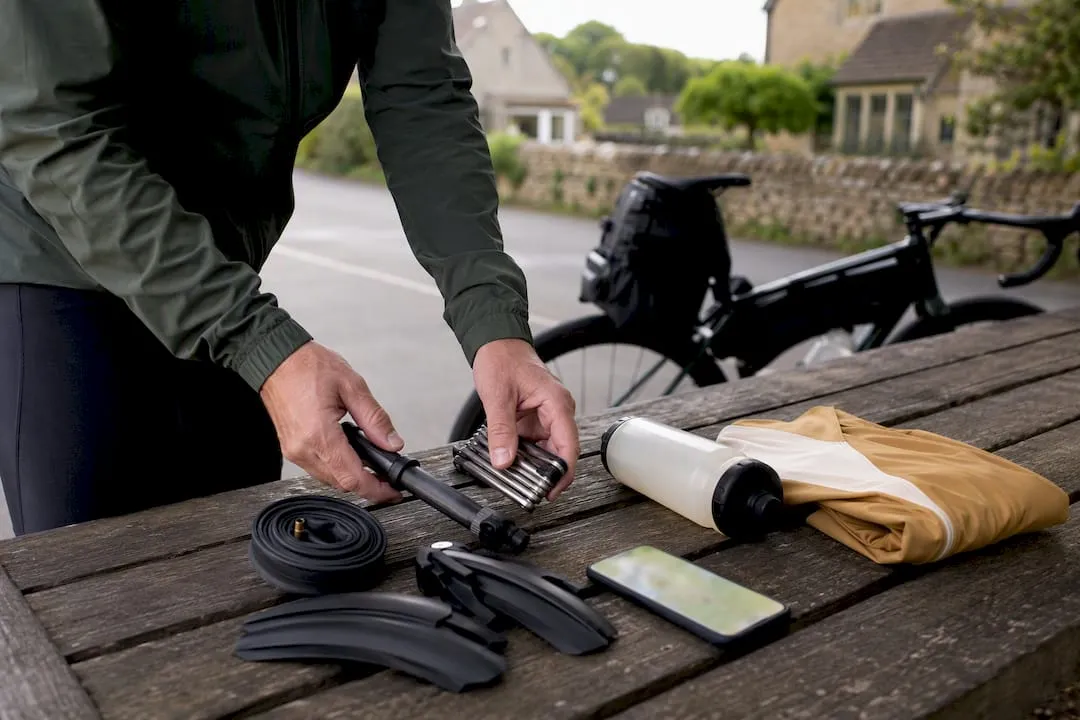
Pack light but don’t skip the basics: a pump, spare tube, multi-tool, mudguards if the forecast is doubtful, a phone loaded with an offline map, and enough water for the distance.
Planning routes with The Cotswolds App
An app lists thousands of places across the region, with an interactive map you can filter by category, with visitor ratings on every place. Riders can use it to find pubs, cafés, and shops sitting near their planned route, turning a bare GPX line into a day with proper stops built in. Check the interactive map before you set off.
Accommodation options for multiday cycling tours
Multiday touring in the Cotswolds works because accommodation is rarely more than 10 to 15 miles apart, which suits the rail-assisted stage lengths on the Cotswold Line corridor well. Market towns like Moreton-in-Marsh and Cirencester offer everything from traditional pubs with rooms to boutique guesthouses, most used to riders arriving with bikes and muddy kit.
Look for places that explicitly welcome cyclists: secure overnight bike storage, somewhere to dry wet gear, and early breakfast service if you’re aiming for a full riding day. Farm B&Bs and village inns along routes such as the Windrush valley or the Cotswold Way corridor often prove more flexible on timing than larger hotels, and they tend to know the local lanes better than any app.
Camping is a genuine option for the fitter multiday rider, and a lighter tent-based setup beats a heavy touring load once the escarpment climbs start. Sites cluster around Cheltenham, Winchcombe and the southern wolds near Bath, giving you flexibility to adjust daily distance around weather or tired legs. One thing to be clear about: the Cotswold Way itself is a walking trail, not a cycling route — National Trails notes that only 19% of its 102 miles run on tracks or bridleways, and cycling a public footpath is not permitted — so plan a camping tour around the lanes and the Cotswold Line corridor instead of the Way.
Whichever you choose, book ahead in the peak May to September window. Village accommodation is limited by nature, and a full pub with rooms on a Saturday night in Bourton is a common disappointment for riders who left it too late.
Local rules and cycling etiquette in the Cotswolds
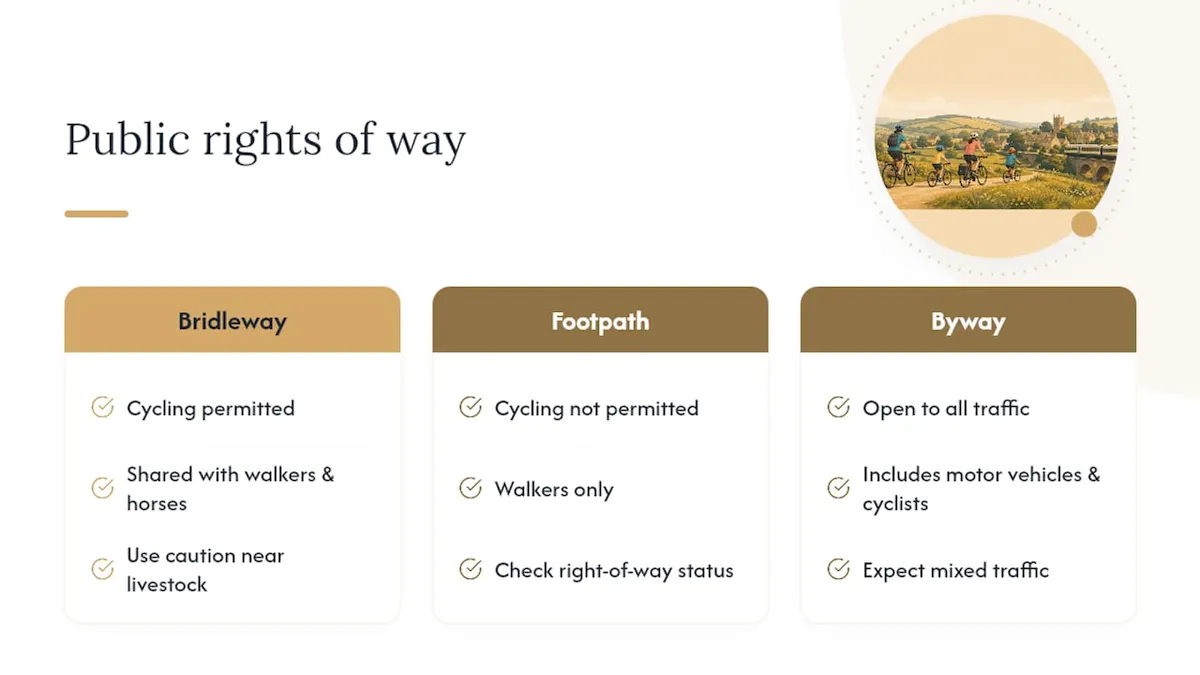
Public rights of way in England split into three types that matter to cyclists: bridleways, where cycling is legally permitted alongside walkers and horse riders; footpaths, where cycling is not permitted; and byways, open to all traffic including cyclists. Getting this wrong on a farm estate or private lane is one of the most common mistakes visiting riders make, so check the right-of-way status of any off-road section before you rely on it.
The Cotswolds sits largely within the Cotswolds National Landscape (renamed from Area of Outstanding Natural Beauty in 2023), and much of the land either side of your route is working farmland or private estate. Stick to the route, close gates behind you, and give livestock a wide, slow berth, particularly on bridleways shared with horses.
Villages throughout the region enforce tight speed limits, often 20mph, through narrow high streets lined with parked cars and pedestrians. Ride at a pace that lets you stop for a horse, a tractor, or a family crossing the road without warning, since sightlines around Cotswold stone walls are often poor.
On multi-use traffic-free paths like the Stroud Valleys Trail, etiquette leans heavily towards courtesy: a bell or a clear verbal warning before overtaking walkers, and slower speeds near dog walkers and children. None of this is heavily policed, but it’s the difference between staying welcome on these routes and generating the kind of friction that leads to access restrictions later.
Points of interest along the way
The honey-stone villages threaded through most Cotswolds routes are the reason people come back year after year. Lower and Upper Slaughter, both on the Windrush valley loop, offer some of the quietest, most photogenic streets in the region, largely free of the crowds that gather in Bourton-on-the-Water itself.
Westonbirt Arboretum, roughly halfway on the Cirencester to Tetbury route, makes a natural stopping point with tree collections that shift colour dramatically through the seasons; autumn rides here are worth timing deliberately. Further north, Moreton-in-Marsh’s Tuesday street market and Chipping Campden’s market hall both sit within easy reach of the northern wolds routes.
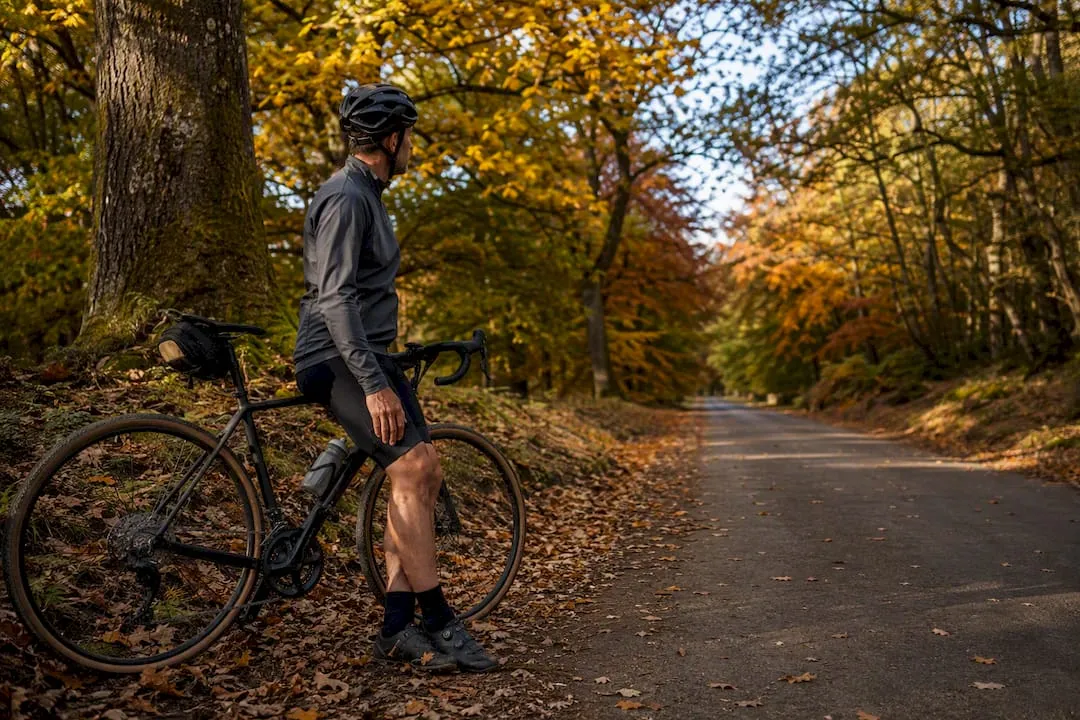
Cleeve Common, reached via the escarpment climb out of Cheltenham, gives you the widest panoramic view on any route in this guide, stretching across the Severn Vale towards Wales on a clear day. Along the Cotswold Water Park, over 150 lakes created from old gravel workings now support wildlife reserves and quiet waterside cafés, a strange but pleasant contrast to the wolds further north.
Village pubs deserve a mention of their own. Many sit directly on or near the routes described above, and a decent number offer bike-friendly outdoor seating and secure spots to lean a bike while you eat. The Cotswolds region is dense enough with these stops that planning a route around lunch, rather than the other way round, is a genuinely sound strategy.
Weather and the best time of day to ride
The Cotswolds sees its driest, most reliable cycling conditions between April and September, though even summer days can turn showery without much warning given the region’s exposed high ground. Morning starts, ideally before 10am, tend to give you calmer air before afternoon winds pick up across open wold sections, particularly noticeable on exposed climbs like Cleeve Hill.
Winter riding is possible on tarmac routes but genuinely unwise on towpaths, bridleways, or anything with a grass or gravel surface, where mud and standing water make progress slow and occasionally hazardous. If you’re set on an off-season ride, stick to the valley tarmac loops around Bourton or the Windrush, and check conditions on any traffic-free section the day before.
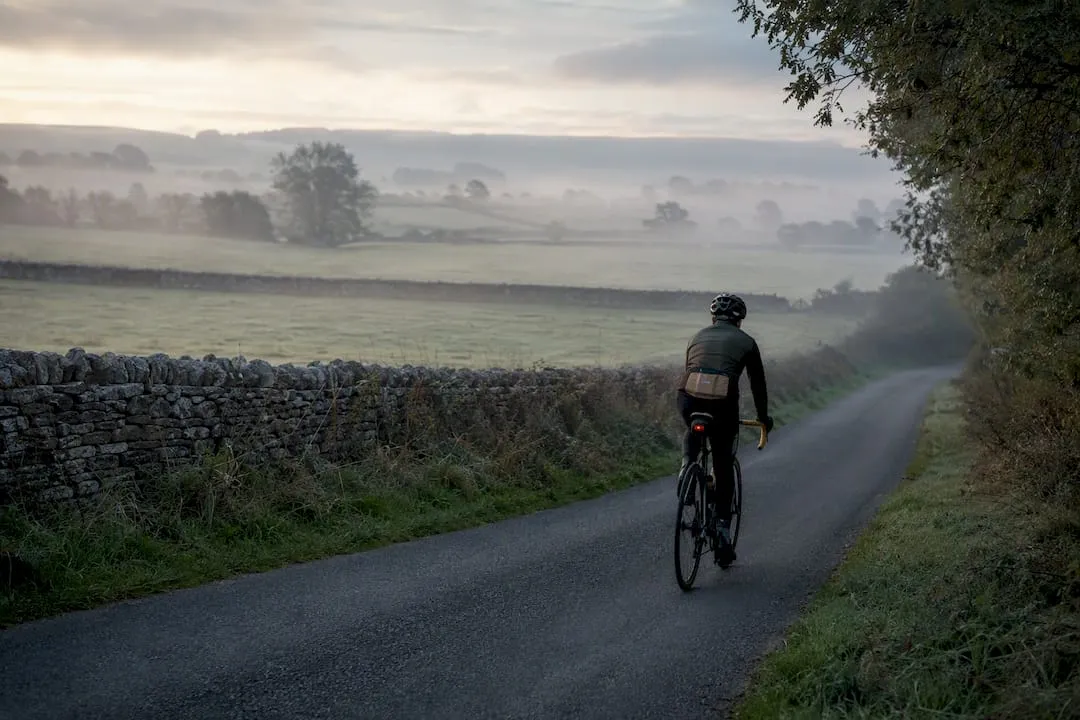
Autumn brings some of the best light and colour of the year, especially through wooded stretches near Westonbirt, but shorter daylight hours mean earlier starts if you’re covering real distance. Fog can settle in valley bottoms on still autumn and spring mornings, usually clearing by mid-morning, so a slightly later start often beats an early one if visibility matters to your route.
Choosing between a valley loop and an escarpment climb
Scenic valley loops reward the rider who wants an easy, photogenic day; escarpment climbs reward the one chasing a proper sense of achievement. Neither is more authentically “Cotswolds” than the other; they’re simply different rewards for different effort. Pick based on honesty about your legs, not on which route looks better afterwards.
Plan your ride with The Cotswolds App
Once you’ve picked a route, the harder part is often finding somewhere decent to eat, a bike-friendly pub, or the nearest village shop when you’re 20 miles from your car. That’s the gap The Cotswolds App fills alongside your GPX file: an interactive map covering thousands of places across the region, filterable by category so you can spot the pubs and cafés without leaving the saddle to check three different websites.
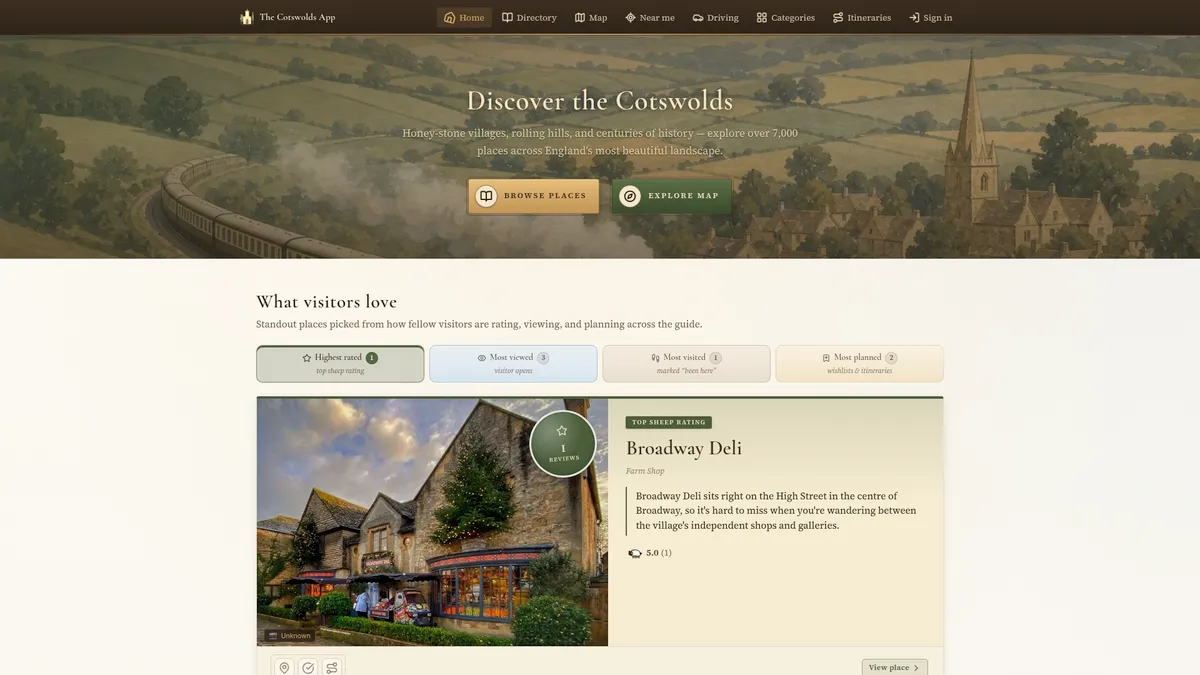
It won’t replace your route planner, but it does the job traditional guidebooks can’t: real-time filtering for exactly what you need at that point on the ride, whether that’s a bike-friendly stop near Cirencester or a highly-rated pub near the Water Park. Open the interactive map before your next ride and drop pins on the stops worth building your day around.
Sources
- Cotswold Line cycle route (77 miles, Oxford to Worcester) | cycle.travel
- The complete guide to cycling the Cotswolds | Art of Bicycle Trips
- Cycling in the Cotswolds | 21 Routes and a 4-Day Tour | Cicerone Press