

Cirencester rewards you with Roman mosaics, one of Britain’s largest surviving amphitheatre earthworks, one of the finest Cotswold churches and a Grade I listed park, all within a fifteen-minute walk of each other. The Corinium Museum, Cirencester Amphitheatre, Parish Church of St John Baptist, Cirencester Park and the Charter Market anchor most visits. The town centre is compact enough that you can cover the essentials in two hours or stretch a visit into a relaxed full day, with proper itineraries laid out further down.
TL;DR:
- Visiting the Corinium Museum provides up to 90 minutes to see Roman mosaics and artifacts, with earlier visits recommended to avoid crowds.
- The amphitheatre is free to explore, open daily during daylight, but uneven terrain and steps may limit access for some visitors.
- Cirencester Park requires a day pass for certain areas and may be restricted during events like polo matches, so check access rules beforehand.
- A half-day itinerary can cover essential sights like the museum, parish church, and amphitheatre within around four to five hours.
- Using The Cotswolds App helps plan routes, find nearby amenities, and access regional attractions, especially for extending beyond town.
Table of Contents
- Quick top 10: what to see first in Cirencester
- Roman heritage: the museum, the amphitheatre and the parish church
- Parks and walks: Cirencester Park, Abbey Grounds and short local routes
- Arts and culture: galleries, makers and live shows
- Markets and shopping: when and where to buy local goods
- Family-friendly and active options: pools, adventure and water sports
- Where to eat and drink: cafés, pubs and recommended restaurants
- Day trips and nearby attractions to extend the visit
- Timed itineraries and practical visiting information
- When to visit
- How The Cotswolds App helps plan your Cirencester visit
- Sources
Quick top 10: what to see first in Cirencester
If you’ve only got a morning, this order works well because it moves from context to open-air exploration without doubling back on yourself.
- Corinium Museum — best for understanding Roman Britain through mosaics and artefacts; allow up to 90 minutes.
- Cirencester Amphitheatre — best for standing in one of Britain’s largest earthwork remains; about 30 to 45 minutes.
- Parish Church of St John Baptist — best for the town’s grandest medieval architecture and a quiet moment; about 20 to 30 minutes.
- Market Place — best for orientation and photographs; 10 minutes.
- Cirencester Park — best for a long, tree-lined walk or a picnic; from half an hour up to a half day.
- Abbey Grounds — best for riverside picnics and gentler strolls; about 20 to 40 minutes.
- New Brewery Arts — best for craft galleries and a coffee break; about 45 to 60 minutes.
- Charter Market (Mondays and Fridays) — best for local produce and a proper Cotswold shopping browse; about 30 to 45 minutes.
- Barn Theatre — best for an evening show if you’re staying overnight; check the schedule ahead.
- Cirencester Open-Air Swimming Pool (May to September) — best for families travelling with children on warmer days; an hour or more.
That sequence covers heritage, green space, culture and family options without wasted crossing back and forth across town.
Roman heritage: the museum, the amphitheatre and the parish church
Start at the Corinium Museum, which holds one of the finest collections of Roman antiquities in the country, spanning the prehistoric period through to Georgian Cirencester. The mosaic galleries are the headline draw. Several were lifted intact from villas around the town and reassembled so you can see the geometric patterns Roman craftsmen laid nearly two thousand years ago. Budget 60 to 90 minutes if you want to read the interpretation boards properly, less if you’re moving quickly.
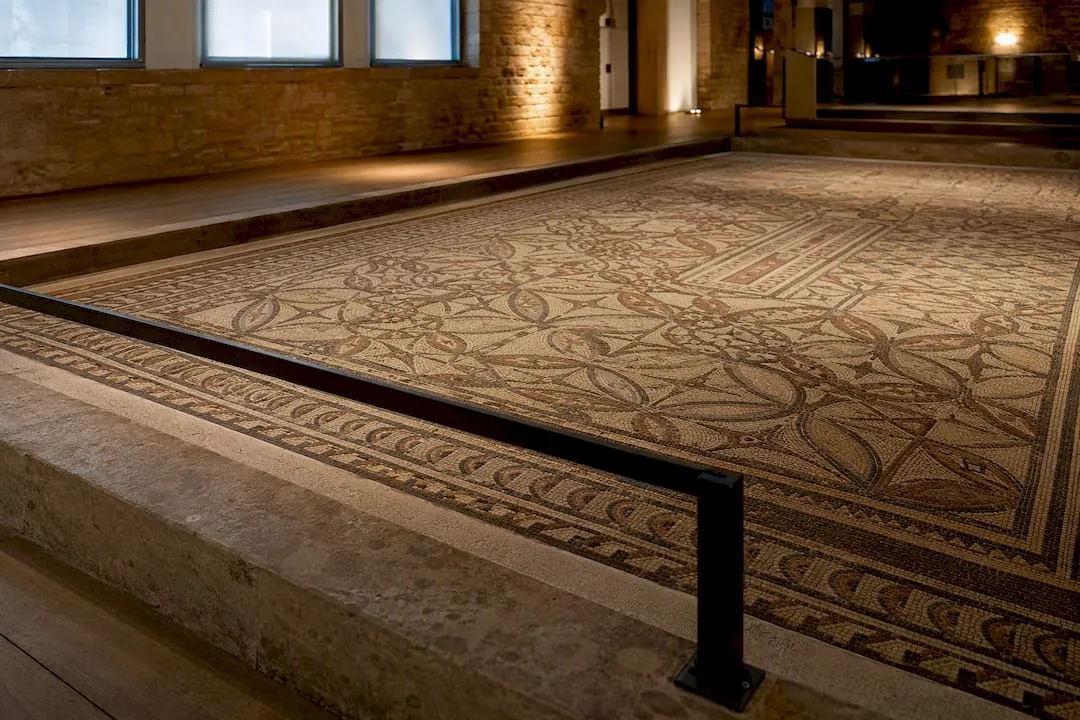
Local guidance suggests visiting the Corinium Museum before the amphitheatre, because the artefacts you see there give the earthworks outside far more meaning. Walking between the two takes about ten minutes across town, past the Abbey Grounds.
The Cirencester amphitheatre is one of Britain’s largest surviving earthwork remains, and it’s free to explore, open daily during daylight hours. There’s no visitor centre and no ticket desk, just grassed banks that once held thousands of spectators watching gladiatorial contests and animal fights. English Heritage notes the terrain is uneven with a small flight of steps at the entrance, so wear proper shoes and expect limited accessibility in parts of the site.
- Corinium Museum: mosaics, Roman galleries, museum shop and café; typically 60 to 90 minutes.
- Cirencester Amphitheatre: open daily, free entry, uneven ground with steps at the entrance.
- Parish Church of St John Baptist: the largest parish church in Gloucestershire, dominating the Market Place with its Perpendicular Gothic tower.
- Tower visits: sometimes available seasonally, offering rooftop views across the town; check locally before planning around one.
- Guided walks: the Cirencester Civic Society runs seasonal town walks lasting roughly 75 to 90 minutes, covering local history you won’t get from a plaque.
Pro Tip: Visit the museum on a quieter weekday morning if you can. The mosaic galleries get busy with school groups in term time, and you’ll want space to actually stand in front of the larger pavements.
Cirencester’s walkability is what makes this trio work as a single loop rather than three separate outings. Opening times and admission details change seasonally, so it’s worth checking the museum and English Heritage pages directly before you travel, particularly if you’re planning around a specific tower opening or guided walk.
Parks and walks: Cirencester Park, Abbey Grounds and short local routes
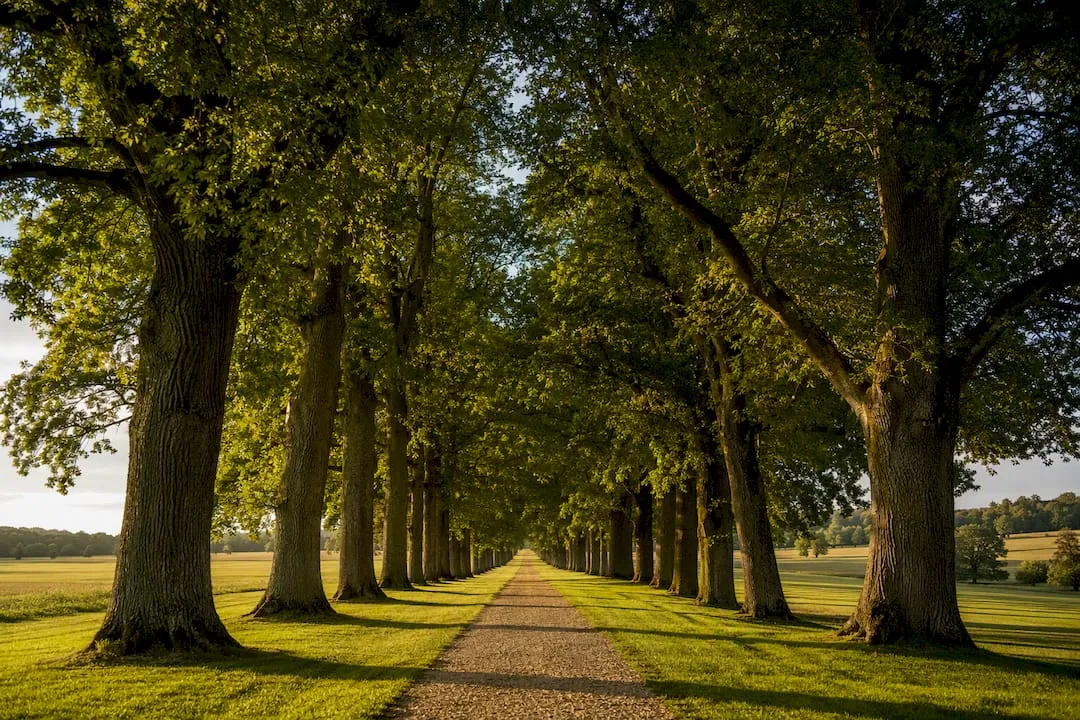
Cirencester Park is the town’s great outdoor set piece: Grade I listed parkland on the Bathurst Estate, with a long avenue of trees that feels genuinely grand rather than merely pretty. Access is permissive rather than automatic. The park requires day passes for some areas, and events such as polo matches or the Cotswold Show can restrict where you’re allowed to walk, so it’s worth checking current access rules before you set off. Dogs are generally welcome on the main routes, but keep them on leads near livestock and during shooting season.
Abbey Grounds sits closer to the centre and suits a shorter visit. The riverside setting along the Churn gives you shaded benches and open lawns, and it’s the better choice if you’ve got a picnic and limited time rather than a whole afternoon.
Three short walks worth knowing:
- Town loop: Market Place to Abbey Grounds to the amphitheatre and back; about 25 minutes, flat and easy.
- Cirencester Park avenue walk: out along the main avenue and back; 45 minutes to an hour, easy going underfoot but longer than it looks.
- Broader country walk: linking Cirencester Park with surrounding footpaths towards the Bathurst Estate boundary; two to three hours for the full circuit, moderate difficulty.
Cyclists connect into the National Cycle Network from town, with routes running out towards the wider Cotswolds and the Cotswold Water Park. The interactive map is genuinely useful here if you want to plot a route rather than guess at footpath junctions on a paper map.
Arts and culture: galleries, makers and live shows
New Brewery Arts is Cirencester’s cultural hub, and it earns that description properly. It’s a regional centre for visual and performing arts with working maker studios, so you’re not just looking at finished pieces behind glass. You can watch potters, weavers and printmakers actually working, browse the craft galleries, and often book a hands-on workshop if you fancy trying something yourself. The on-site café makes it an easy stop to combine with a market day, and the shop is one of the better places in town for a considered gift rather than a generic souvenir.
The Barn Theatre, a five-minute walk from the Market Place on Beeches Road, runs a genuinely varied programme: touring drama, comedy, music and family shows through the year. Booking ahead matters for popular evenings, particularly weekends, and pairing a show with dinner in town beforehand works well given how close everything sits.
- New Brewery Arts: galleries, studios, workshops, café and shop.
- Barn Theatre: touring shows across drama, comedy and music; book ahead for weekends.
- Smaller independent galleries around town change their exhibitions regularly, so it’s worth a quick check of what’s showing before you visit if a particular artist or medium interests you.
Markets and shopping: when and where to buy local goods
The Charter Market fills the Market Place on Mondays and Fridays, and it’s been part of Cirencester life for centuries. Stalls sell fresh produce, flowers, cheese, and a solid range of household goods, giving the town centre genuine buzz on those two days rather than the quieter rhythm of the rest of the week.
A farmers’ market and separate arts and crafts market run on alternating schedules through the month, focusing on local food producers and Cotswold makers rather than general retail. Check current dates before you travel, since these rotate.
- Charter Market: Mondays and Fridays, general produce and goods.
- Farmers’ market: monthly, local food and drink producers.
- Arts and crafts market: monthly, Cotswold makers and small-batch goods.
- Corn Hall: antiques and collectables, plus independent boutiques along Black Jack Street and the surrounding lanes.
Market days are also the busiest days for parking and café tables, worth bearing in mind if you’re planning a tight schedule.
Family-friendly and active options: pools, adventure and water sports
Families get a genuinely good deal out of Cirencester, partly because the town centre is small enough that nobody’s dragging tired legs for miles between sights.
- Cirencester Open-Air Swimming Pool opens seasonally from May to September, heated to a comfortable temperature, with separate main and children’s pools and both lane and open swimming sessions.
- Cotswold Water Park, roughly fifteen minutes away by car, offers sailing, paddleboarding, wakeboarding and lakeside beaches, a proper contrast to the town’s heritage sites if the children need to burn energy.
- Local adventure activities, including climbing walls and outdoor play areas in the wider area, suit a wet-weather backup plan.
- Abbey Grounds and the park give younger children space to run without the constraints of museum galleries.
A simple half-day family schedule: start at the Corinium Museum for an hour (most children enjoy the hands-on Roman activities), walk to Abbey Grounds for a picnic lunch, then either head to the open-air pool if it’s summer or the Water Park if you fancy the drive. That covers heritage, green space and active time without overloading anyone before lunch.
Where to eat and drink: cafés, pubs and recommended restaurants
Cirencester’s food scene leans on genuinely good local producers rather than chain uniformity, and Cotswold lamb, cheese and seasonal vegetables turn up on menus across the price range.
- Brunch or coffee: independent cafés around the Market Place and Cricklade Street do a reliable flat white and a proper cooked breakfast if you’re fuelling up before a museum visit.
- Casual lunch: bakeries and sandwich shops near New Brewery Arts suit a quick stop between sights.
- Pub classic: several traditional pubs in the centre serve proper Sunday roasts and local ales, good for a slower midday meal.
- Elevated dinner: a handful of restaurants around town build seasonal menus around Cotswold produce, worth booking ahead for weekend evenings.
Market days (Monday and Friday) and Saturdays bring the biggest crowds to lunch spots, so book ahead or aim for an early or late sitting if you want to avoid queuing.
Day trips and nearby attractions to extend the visit
Cirencester sits close enough to several major Cotswold draws that a single overnight stay easily becomes a two or three day trip.
- Chedworth Roman Villa, around 20 minutes by car, extends the Roman theme with one of the largest villa sites in the country; pairs naturally with a morning at the Corinium Museum.
- Bibury, roughly 25 minutes away, gives you the postcard Cotswold cottages at Arlington Row, best visited early to beat coach parties.
- Cerney House Gardens, a short drive north, suit a quieter afternoon among walled gardens and woodland.
- Westonbirt Arboretum, about 40 minutes south, is worth the drive in autumn when the tree colour is at its best.
Chedworth and Bibury both work as half-day add-ons to a Cirencester base; Westonbirt suits a full separate day given the drive time.
Timed itineraries and practical visiting information
Here’s how the sights actually fit together depending on how long you’ve got.
- Two hours: Market Place and Parish Church of St John Baptist (20 minutes), Corinium Museum highlights only (45 minutes), amphitheatre (30 minutes), coffee to finish.
- Half day (4 to 5 hours): add a full museum visit, a walk through Abbey Grounds, and lunch at a pub or café near the centre.
- Full day: everything above, plus New Brewery Arts, a proper walk in Cirencester Park, and either the open-air pool in summer or a Charter Market browse on a market day.
| Itinerary | Core stops | Approximate duration |
|---|---|---|
| Two hours | Market Place, Church, Museum highlights, Amphitheatre | 2 hours |
| Half day | Above plus full museum, Abbey Grounds, lunch | 4 to 5 hours |
| Full day | Above plus New Brewery Arts, Cirencester Park, market or pool | 7 to 8 hours |
Cirencester has no direct rail station, but Kemble station sits about four miles out and connects to trains from London Paddington and Gloucestershire, with a taxi or bus link into town. Stagecoach buses run regular services from surrounding towns and villages. Several central car parks serve the Market Place area, and these fill quickly on Charter Market days.
Accessibility varies by site: the museum and church are step-free in most areas, while the amphitheatre’s uneven grass and entrance steps limit access for wheelchair users. Always check current opening times and admission information directly with each attraction before you travel, since seasonal hours shift through the year.
When to visit
Tuesday and Thursday mornings are the quietest on the Market Place — the Charter Market fills it on Mondays and Fridays. Spring and early autumn give you good light for the amphitheatre without summer’s coach traffic. For mapping out a longer trip, the Cirencester area guide is worth a look before you arrive.
How The Cotswolds App helps plan your Cirencester visit
Planning a trip by cross-referencing multiple websites can be tedious, which is the gap digital guides like The Cotswolds App aim to fill. It’s an interactive map covering many places across the Cotswolds, filterable by category, so you can pull up dog-friendly pubs near the amphitheatre or find the nearest café to Cirencester Park without switching apps.
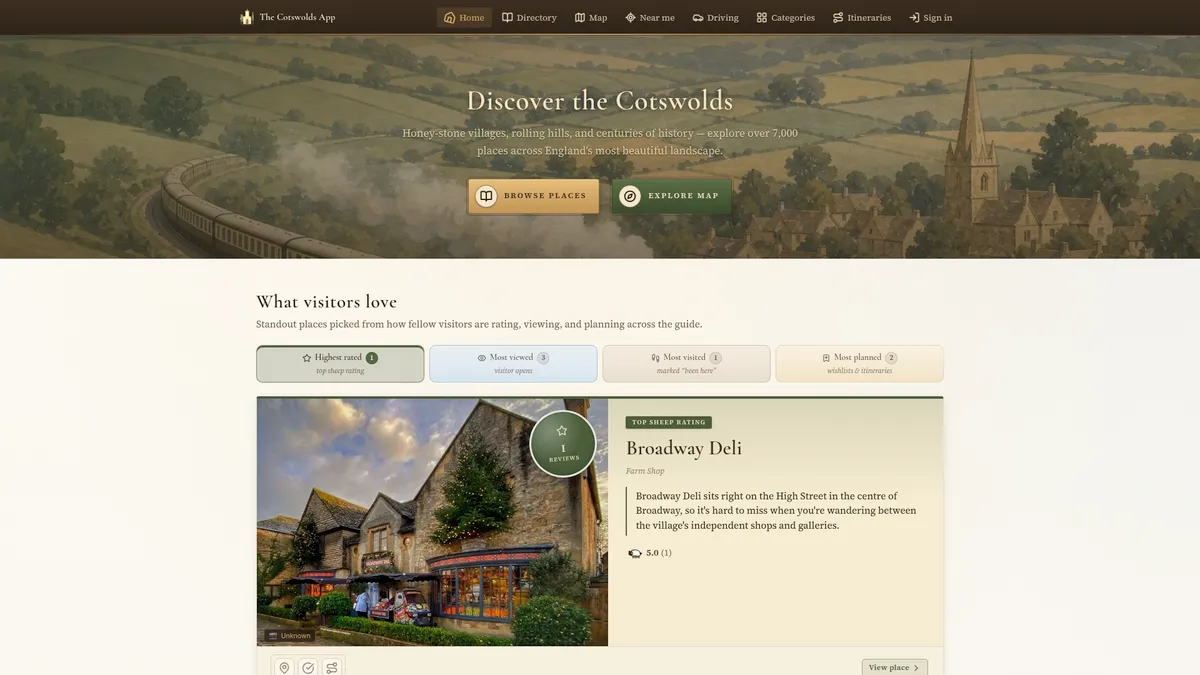
For a town this walkable, that matters more than it might sound. You can browse by category before you set off, check market and local event listings alongside attractions, and build a route on the map rather than guessing your way between sights. If you’re extending your trip beyond the town centre, the Cotswolds attractions guide rounds up nearby options worth adding to your itinerary. Install the app before you travel and you'll have the whole region's listings, ratings and hidden gems on hand the moment you arrive.
Sources
- Corinium Museum
- New Brewery Arts
- Cirencester amphitheatre | English Heritage
- Things to do — Cirencester Town Council