
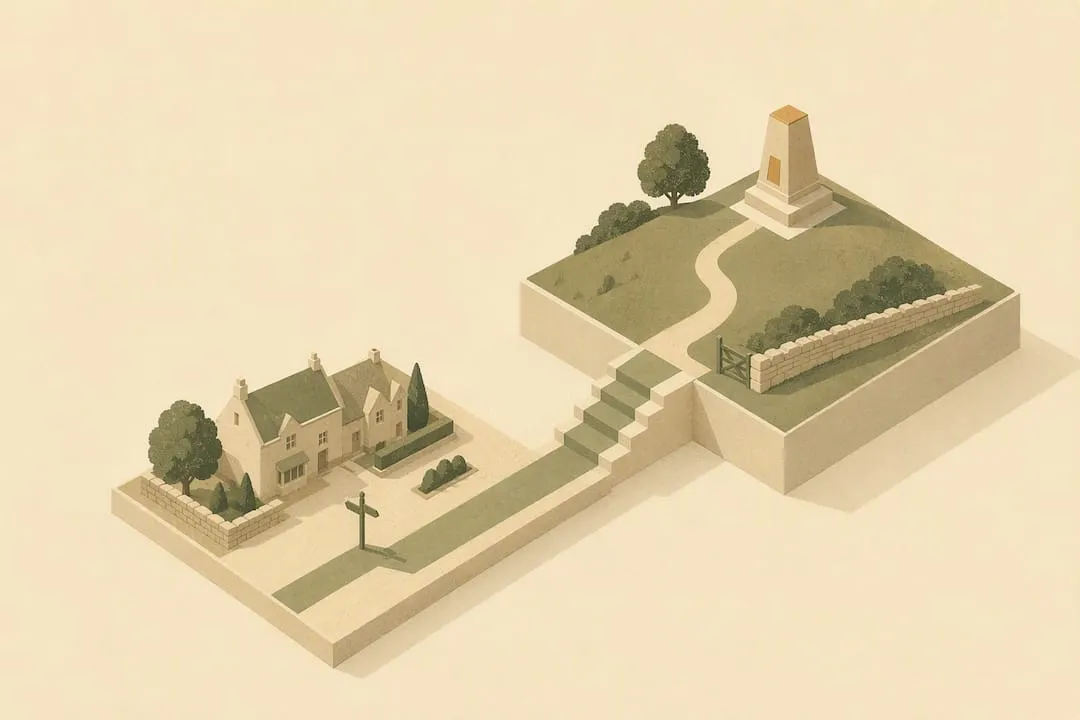
Burford rewards a half- to full-day visit, and it earns that with genuine substance rather than postcard charm alone. Between St John the Baptist’s soaring nave, the volunteer-run Tolsey Museum and Cotswold Wildlife Park two miles down the road, you have enough to fill a proper day out. The one thing to plan around: Burford gets busy at weekends and swells further during Levellers Day, so arrive early or come mid-week if you want the High Street to yourself.
TL;DR:
- The town’s main attractions are within walking distance, including the church, museum, wildlife park, and scenic walks along the Windrush valley.
- Visiting early mornings or mid-week helps avoid crowds, especially on weekends, Levellers Day, and during busy festivals like the Literary Festival.
- Parking at Guildenford Car Park is the best option, with 161 free spaces and enforcement from 8am to 6pm, to save time during busy weekends.
- A full day allows exploring the church, museum, and wildlife park, while shorter visits focus on the High Street and river views.
- Arriving early in the day or at dusk gives the best light and the fewest people on the High Street.
Table of Contents
- Burford at a glance
- What are the best things to do in Burford?
- Where to eat and drink in Burford
- Shopping and antiques on Burford High Street
- The history behind Burford’s heritage sites
- How to get to Burford and where to park
- Where to stay in Burford
- Practical tips for visiting Burford
- Suggested itineraries for a day in Burford
- Timing the High Street
- Plan your Burford visit with The Cotswolds App
- Sources
Burford at a glance
Burford sits in Oxfordshire on the western edge of the county, its High Street sloping down to the River Windrush in one of the best-known views in the Cotswolds. The town’s population has historically hovered around 1,400, which tells you everything about scale: this is not a place you get lost in, but one you can properly explore in a morning or stretch across a whole day if you take the walks and the wildlife park seriously.
Here’s the quick version for anyone planning a visit:
- Best for: antique hunting, a genuinely pretty High Street, and as a base for Windrush valley walks
- Time to allow: half a day for the essentials, a full day if you’re adding the wildlife park or a longer walk
- Watch the calendar: Levellers Day on the Saturday nearest 17 May, the Burford Literary Festival in late September, and any summer weekend all bring crowds
- Getting around: the A40 brings you in by car, Charlbury is your nearest railhead, and Guildenford Car Park is the public car park to head for
Pro Tip: Stay overnight and you get the High Street twice, once at dusk when the coach parties have gone and once at first light when it belongs to dog walkers and delivery vans.
What are the best things to do in Burford?
Burford’s attractions cluster tightly enough that you can walk between all of them, which makes planning refreshingly simple. Here is the order that works best if you’re seeing the town properly for the first time.
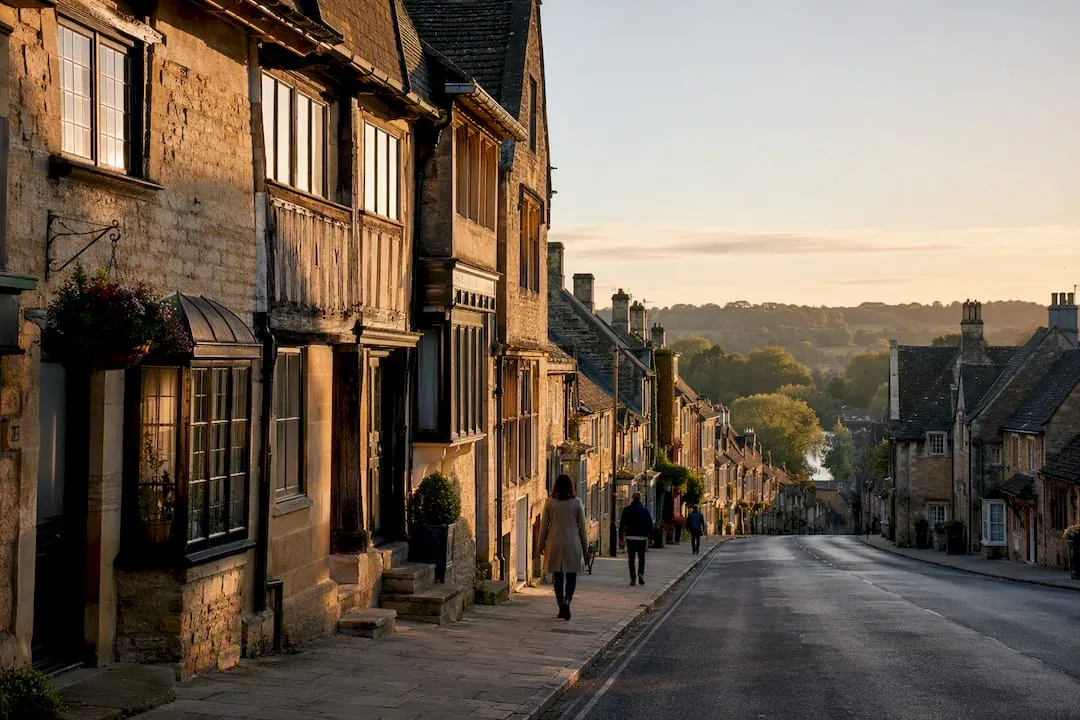
1. Walk the High Street to the bridge. The view down the slope to the River Windrush is the one everyone photographs, and for good reason. Go early morning or early evening for the best light and the fewest tour groups; midday in July brings coaches and crowds that flatten the effect entirely.
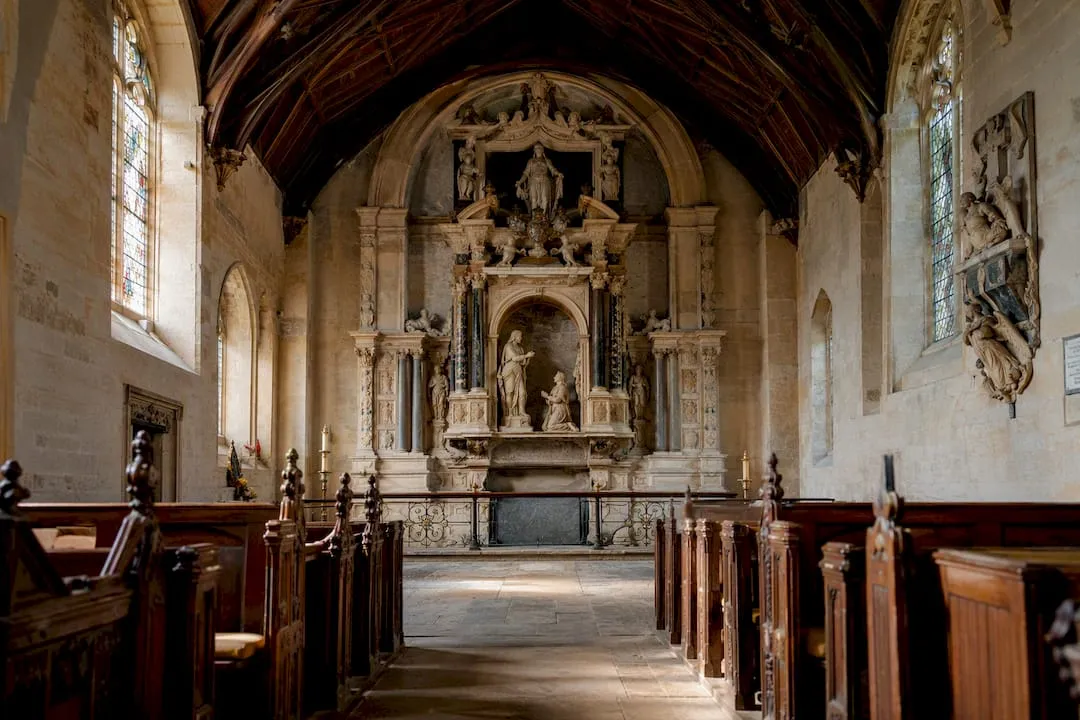
2. Step inside St John the Baptist. Simon Jenkins gives it five stars in England’s Thousand Best Churches, one of only eighteen to get them. Inside you’ll find the Tanfield monument and, scratched into the lead of the font, the graffiti of one of the Levellers held here in 1649: “ANTHONY SEDLEY 1649 PRISNER”, spelling and all. The church takes over 75,000 visitors a year and publishes set hours, Monday to Saturday 10am to 4pm and Sunday 1pm to 4pm, though opening depends on volunteers and can shift around festivals, so check before a special trip. Treat it as a working church rather than a museum piece; services take priority, and quiet respect goes a long way.
3. Visit the Tolsey Museum. Housed in the historic Tolsey building on the High Street, this small volunteer-run museum tells Burford’s story from Saxon origins through the wool trade to the present. It’s free to enter, with donations welcome, and opens seasonally, afternoons from April to October, with reduced hours running into December and a winter closure from January to March. Check current dates before you go since volunteer staffing means hours can shift. The museum is on the first floor and reached by stairs only, with no lift and no toilet.
4. Head to Cotswold Wildlife Park. About two miles south of Burford at Bradwell Grove, this is a proper family attraction with big cats, rhinos and a walled garden, not a token petting zoo. It runs seasonal opening hours and requires paid admission, so check ticket prices on the park’s own site before setting off, particularly if you’re travelling with young children who’ll want the full day there.
5. Walk the Windrush valley. Shorter riverside strolls from the bridge take twenty to thirty minutes there and back, while longer routes toward the surrounding villages can easily fill two to three hours. Either way, you’re walking through genuine wildflower meadow country rather than a manicured park.
6. Time a visit around Levellers Day. Held on the Saturday nearest 17 May each year, and running since 1975, this event commemorates the mutiny with speeches, music and a procession through town. It’s a genuinely atmospheric occasion, but it also means the High Street, the church and every car park fill up fast, so build extra time into your journey if you’re coming that weekend.
Where to eat and drink in Burford
Burford punches well above its size when it comes to food, with everything from a quick bakery stop to a proper sit-down dinner within a five-minute walk of each other.
- Morning and afternoon: independent tea rooms and bakeries dot the High Street, ideal for a coffee before the church opens or a slice of cake after the museum
- Lunch and dinner: several historic coaching inns serve classic pub food, with roaring fires in winter and courtyard seating in summer
- Something smarter: a couple of higher-end restaurants cater to an evening out, worth booking ahead for
- Weekends and event days: phone ahead or book online, particularly around Levellers Day and the September Literary Festival, when tables disappear fast
- Dogs and families: many of the pubs welcome well-behaved dogs in the bar area, and most High Street cafés are happy to seat families, though it’s worth asking about restrictions before you settle in on a busy day
If you’re touring the wider Cotswolds afterwards, the same mix of tea rooms and honest pub food turns up in villages like Bourton-on-the-Water, so Burford is a good introduction to the region’s dining rhythm rather than an outlier.
Shopping and antiques on Burford High Street
Burford has been a magnet for antique dealers for decades, and the High Street still carries that reputation. Specialist shops sit alongside general antique dealers, and collectors regularly turn up furniture, silverware, prints and smaller decorative pieces you won’t find in a chain shop anywhere else.
- Antiques and specialist dealers: several shops along the High Street focus on particular periods or categories, worth a slow browse rather than a quick scan
- Local food producers: butchers, bakers and smokehouses supply genuinely local produce, good for picking up something to take home
- Markets and fairs: timings vary through the year, so check current dates with Burford Town Council or the local tourism pages before building a trip around one
Half an hour is enough for a quick look. Serious antique hunters should allow closer to two hours to do the High Street justice.
The history behind Burford’s heritage sites
Burford’s story stretches back to a Domesday mention and an early market charter, but its real prosperity came from the medieval wool trade, which paid for the grand parish church and the merchant houses that still line the High Street. The Tolsey itself, a distinctive market-house structure raised on stone pillars, once housed the guild’s business and now holds the museum’s archive of local records tracing that development from Saxon settlement to modern tourism.
The Civil War left its own mark. In May 1649 some 340 mutinous Parliamentary soldiers known as the Levellers were captured in Cromwell’s night attack and held in St John the Baptist for about three days. On 17 May three of them were shot — by tradition against the churchyard wall, though the church says the exact spot was never recorded. One prisoner left his name in the lead of the font, and it is still there. The ornate tomb nearby belongs not to a wool merchant but to Sir Lawrence Tanfield, Lord Chief Baron of the Exchequer, who bought the estate in 1583 and became lord of the manor — an incomer whose grip on the town made him thoroughly unpopular, and whose monument now dominates the church the wool trade paid for.
Both sites ask for quiet respect from visitors. The church remains an active place of worship, so time your visit around any services, and the Tolsey Museum relies on donations to keep its doors open, so a coin in the box on the way out helps more than you’d think.
How to get to Burford and where to park
Driving is the easiest way in. The A40 brings you from Oxford in around 30 minutes off-peak — the stretch into Oxford is notoriously congested at rush hour — and from Cheltenham in around 40, though the High Street narrows sharply through the town centre, so slow down and expect to give way to pedestrians stepping off tight pavements.
- Parking: head straight for Guildenford Car Park, which offers 161 free spaces (166 counting the accessible and parent-and-child bays) split between four-hour and ten-hour bays, with enforcement usually running 8am to 6pm
- Accessible parking: three Blue Badge bays, free with no time limit for valid badge holders, and two parent-and-child bays
- By train: Burford has no station of its own; the nearest well-served stations are Charlbury and Kingham on the Cotswold Line, both roughly eight miles out, with a taxi or bus needed to finish the journey. Shipton and Ascott-under-Wychwood are closer but have only a couple of trains a day and none on Sundays
- By bus: the Stagecoach 233 links Burford to Carterton and Witney, and the Pulhams X52 runs across to Cheltenham one way and Oxford the other, though timetables can be sparse outside peak hours, so check before relying on one for a same-day return
Pro Tip: Circling the High Street looking for a space wastes more time than it saves. Go directly to Guildenford and arrive before 10am on any weekend or event date, since that’s when the free bays fill fastest.
Where to stay in Burford
A day trip covers the essentials comfortably, but staying overnight changes the character of the visit. Several character inns and small hotels sit directly on or just off the High Street, many with restaurants attached that let you skip the evening rush for a table elsewhere in town. Self-catering cottages suit longer stays or families who want more space and the flexibility to cook rather than eat out every night.
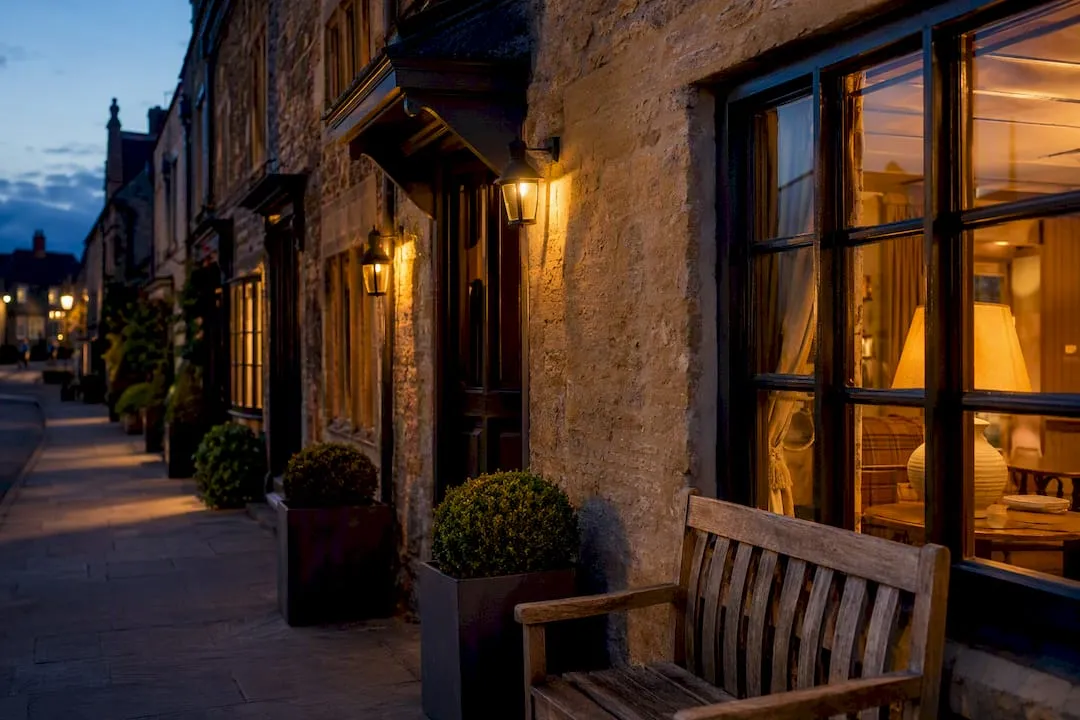
The practical case for staying over is simple: you get the High Street before the day-trippers arrive and after they’ve left, which is when its honey-stone frontages look their best. If you’re combining Burford with wider exploring, an overnight stay also puts you closer to villages further into the Cotswolds without the drive back at the end of a long day.
Choose a day trip if you’re focused purely on the church, the museum and a walk. Choose an overnight stay if you want the wildlife park, a proper valley walk, and an evening meal without watching the clock.
Practical tips for visiting Burford
A few small adjustments make the difference between a smooth visit and a frustrating one.
- Timing: mid-week and early morning visits consistently beat weekend afternoons for both crowds and parking availability
- Accessibility: the High Street has a genuine slope, steep enough to notice with a pushchair or limited mobility, and while the church is step-free at ground level, the Tolsey Museum is up a flight of stairs on the first floor, with no lift and no toilet
- Dogs: welcome in most pubs and on the walking routes, but restricted in Cotswold Wildlife Park and some private gardens open to the public
- Facilities: public toilets are available near the main car park, and tourist information is best sourced through the town council’s own pages before you travel
Pro Tip: If you’re relying on a taxi from Charlbury station, book it ahead rather than assuming one will be waiting. Rural taxi availability in this part of Oxfordshire is thinner than city visitors expect.
Suggested itineraries for a day in Burford
1. Half-day itinerary. Start with a morning walk down the High Street to the bridge, call into the Tolsey Museum if it’s open, then finish with coffee or an early lunch at one of the High Street cafés.
2. Full-day itinerary. Cover the High Street and St John the Baptist in the morning, have lunch at a pub, then spend the afternoon either at Cotswold Wildlife Park or on a longer Windrush valley walk.
3. Family-friendly itinerary. Head to Cotswold Wildlife Park first thing to make the most of the day, follow it with a short, easy riverside walk to burn off the last of everyone’s energy, then finish with a child-friendly meal back in town.
Timing the High Street
The High Street photographs best before 9am and after 6pm, when low light flatters the honey-stone fronts far better than the glare of a summer afternoon crowd. Burford also works better as a base than as a single stop: come for the church and the museum, then use it as a starting point for the villages within a short drive.
Plan your Burford visit with The Cotswolds App
A dedicated app can be a practical alternative to juggling multiple tourism websites and a paper map while you’re standing on the High Street trying to work out where to park. Some apps offer interactive maps covering thousands of places across the region, filterable by category, with visitor ratings on every listing, which matters in towns where opening hours shift seasonally and parking bays fill fast.
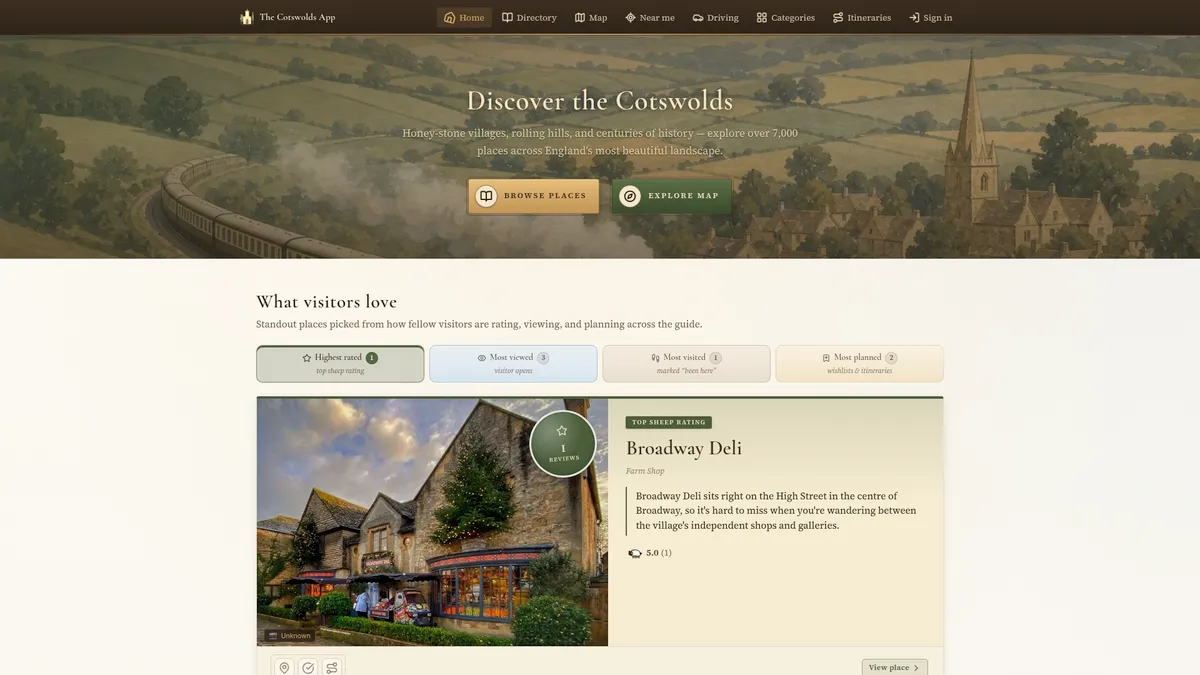
Instead of guessing whether the Tolsey Museum is open this month or which car park has space left, you can pull Burford and the surrounding villages onto one map and filter for what actually matters to your day: a dog-friendly pub, a family stop, or a quieter walking route away from the crowds. If you’re building out a wider Cotswolds trip beyond Burford, the Cotswolds area guides extend that same planning approach to neighbouring villages. Install The Cotswolds App before you set off and have your Burford day mapped out before you’ve even parked the car.