
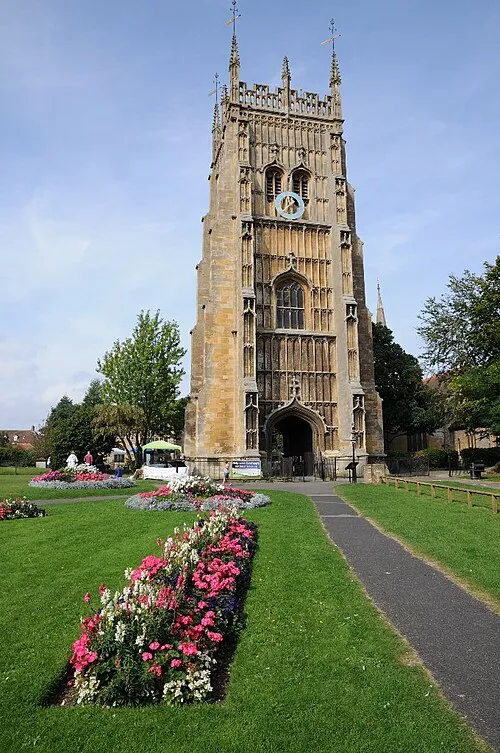
📷 Photo by Philip Halling · CC BY-SA 2.0 · Wikimedia Commons
This site preserves what remains of one of medieval England's most important monasteries.
Founded around 700 by Saint Egwin following a vision reported by a local swineherd, Evesham Abbey grew into one of the country's wealthiest religious houses. The Benedictine community thrived through the Norman Conquest thanks to the abbot's diplomatic approach to William the Conqueror, and by the Middle Ages the abbey wielded considerable power and influence across the region.
Rather than a single dramatic structure, you'll encounter substantial ruins scattered across the grounds that convey a genuine sense of the complex's former scale. The most striking survivor is a section of original abbey walling, while fragments of the 13th-century chapter house, the almonry building, a 16th-century bell tower, and a gateway piece together the story of monastic life here. The site holds particular historical significance as the burial place of Simon de Montfort, the 13th-century political figure whose monument was dedicated by the Archbishop of Canterbury in 1965.
The abbey's decline came during Henry VIII's dissolution of the monasteries in the 1530s, when most buildings were demolished. The remains sit in the heart of Evesham, a market town in Worcestershire surrounded by the Vale of Evesham's agricultural landscape. The town itself is worth exploring for its Georgian architecture and riverside location on the Avon, and it works well as a base for exploring the wider Cotswolds region.
Visitor reviews
Every review has a sheep rating. If you have dogs on your account, you can add an optional dog-friendly paw rating when you post.
Photos
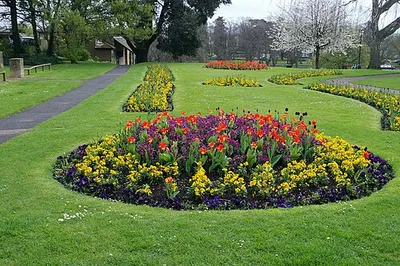
S. McKay · CC BY-SA 2.0 · Wikimedia Commons
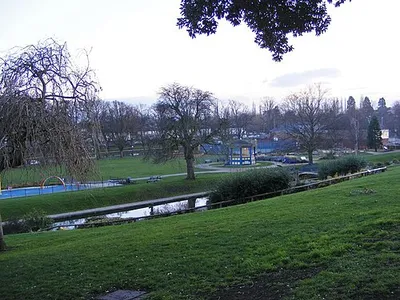
G. Griffiths · CC BY-SA 2.0 · Wikimedia Commons