
Illustration — photo coming soon
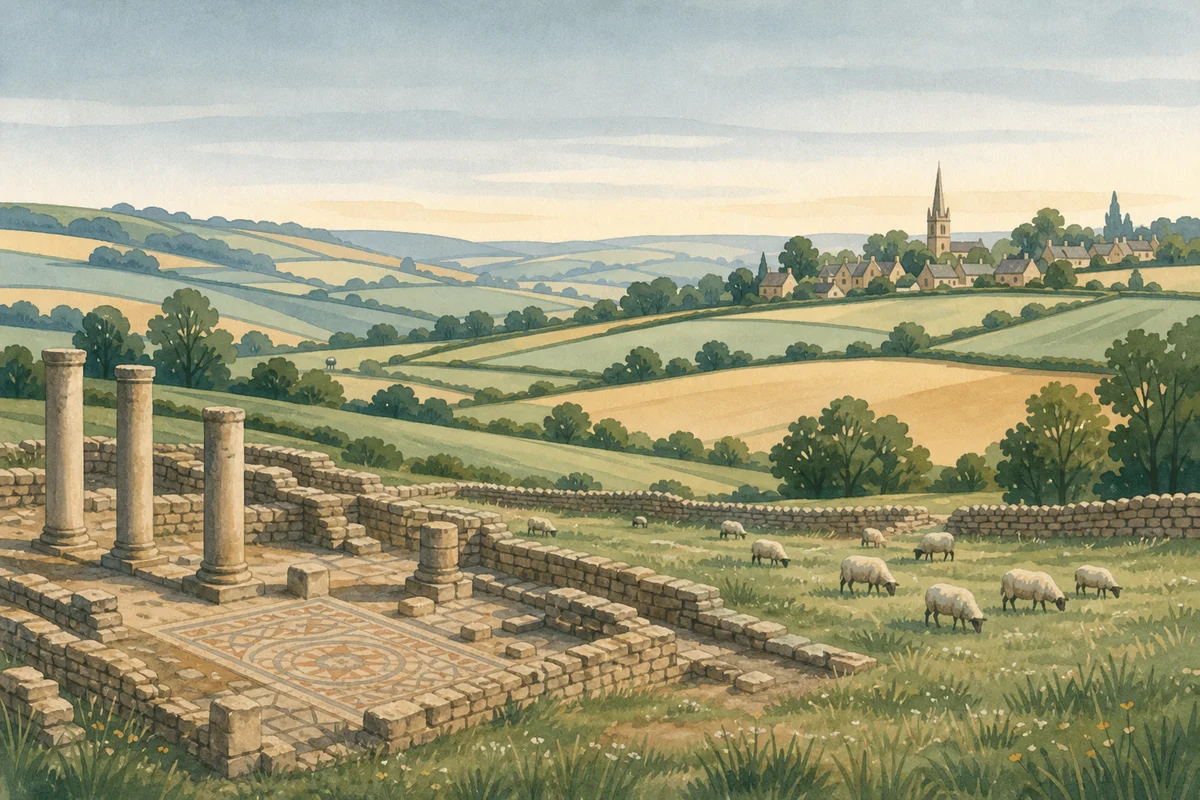
A substantial Roman villa once occupied this spot along London Road, the home of a wealthy family during Rome's occupation of Britain.
Nineteenth-century excavations revealed much about daily life and farming practices across Roman Gloucestershire, but archaeologists have carefully re-buried the physical remains to preserve them for future research. You won't encounter dramatic ruins here—the site lies mostly hidden beneath the surface—yet it marks an important chapter in the region's ancient story.
This quiet corner of Stratton gives little outward indication of what lies below, which is precisely what makes it meaningful. It's a powerful reminder that the Cotswolds landscape contains far more history than what you see on the surface. For a deeper understanding of Roman life in this area, Cirencester is only a short drive away and offers substantially more to explore. The town was once Corinium Dobunnorum, the second-largest city in Roman Britain, and its museums contain an exceptional collection of mosaics, artifacts, and displays from that major settlement. Those exhibits bring the period to life in ways the buried villa alone cannot, providing a fuller picture of what stood here nearly two thousand years ago.
Stratton itself remains a quiet village where you can experience the Cotswolds as it exists today, all the while standing on ground with deep roots stretching back to the Roman era.
Visitor reviews
Every review has a sheep rating. If you have dogs on your account, you can add an optional dog-friendly paw rating when you post.