
Illustration — photo coming soon
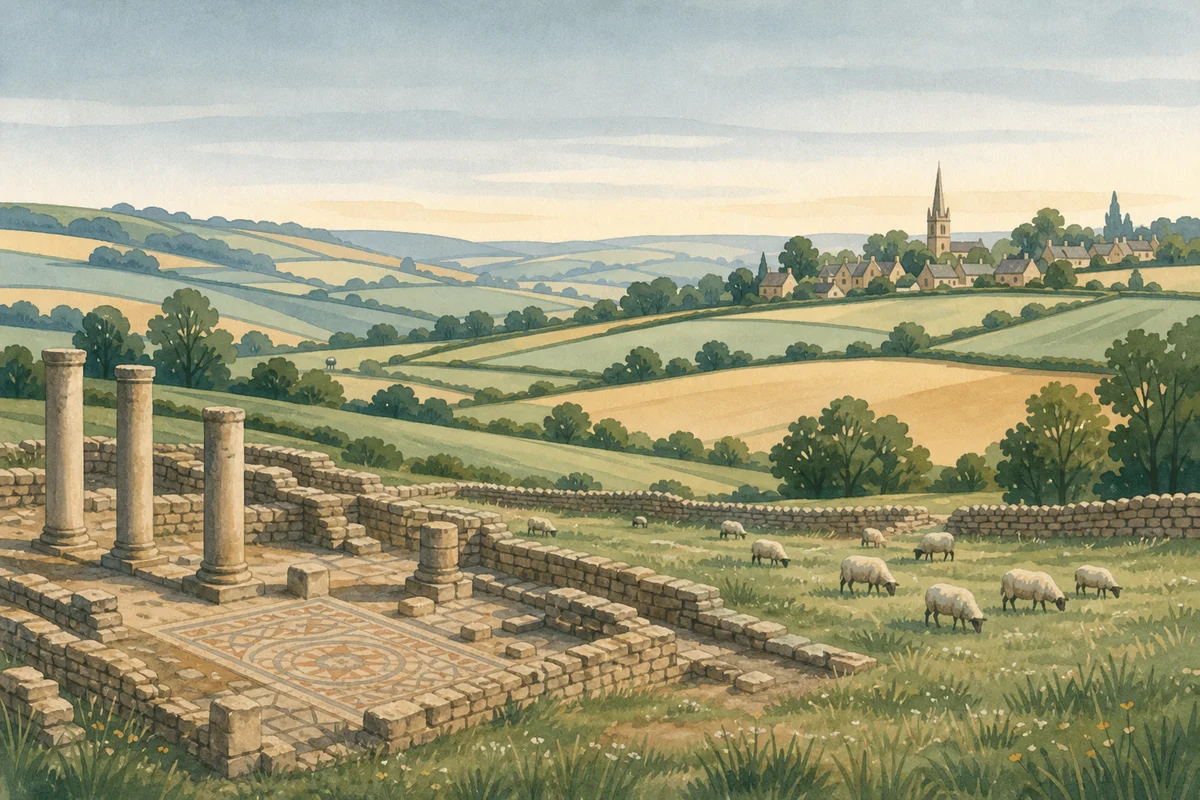
Walking the stretch of Ermine Way near Brimpsfield means treading on one of Britain's most enduring pieces of Roman infrastructure.
This ancient road, built nearly two thousand years ago, once connected Glevum—modern-day Gloucester—with Corinium Dobunnorum, now Cirencester, serving as a vital artery for legions, traders, and messengers moving between these important settlements. What makes it special is that you're not examining artefacts in a museum or picking your way through excavated ruins; instead, you're following the actual route itself, still remarkably visible as it cuts through fields or forms part of a country lane, as straight and purposeful as Roman engineers intended it to be.
The road is a fascinating way to connect with the Roman period in Britain, and the sheer directness of it—a line drawn across the landscape with remarkable confidence—speaks volumes about Roman engineering prowess. Walking it gives you a genuine sense of how this landscape has functioned and been shaped across centuries. You'll find small Brimpsfield nearby if you need refreshments or basic facilities, while Cirencester, a much larger town with substantial Roman remains, sits just along the route itself and provides excellent context for understanding the importance of what you're walking through. It's ideal for a historical ramble that combines genuine archaeological interest with the pleasure of exploring the Cotswolds countryside on foot.
Visitor reviews
Every review has a sheep rating. If you have dogs on your account, you can add an optional dog-friendly paw rating when you post.