
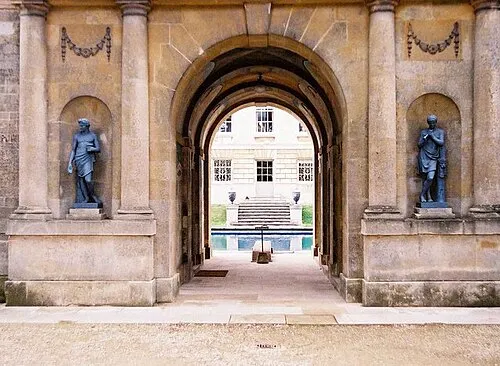
📷 Photo by P L Chadwick · CC BY-SA 2.0 · Wikimedia Commons
This elegant country house sits just outside Faringdon in Oxfordshire and offers real insight into how the landed gentry actually lived across several centuries.
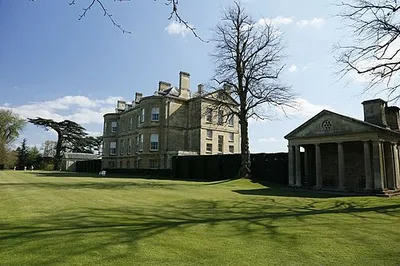
Built between 1780 and 1783, Buscot House displays an austere neoclassical design that reflects the architectural tastes of its era, and it's been carefully preserved as a Grade II* listed building.
What makes a visit compelling is the house's fascinating ownership story. Edward Loveden Loveden commissioned it and his family held onto the property for decades before Robert Tertius Campbell, an Australian merchant, acquired it in 1859. The house gained unexpected notoriety through Campbell's daughter Florence, who became caught up in one of Victorian England's most infamous unsolved murder cases. Later ownership passed to Alexander Henderson, a financier who became Baron Faringdon and left his own mark on both the building and the surrounding estate.
Inside you can move through the rooms and see period furnishings that show you how different generations actually lived and what occupied their minds. The grounds are equally rewarding, demonstrating how these estates functioned as working properties rather than simply grand displays. Check opening times before heading out, as the house operates on a seasonal schedule. Faringdon itself serves as a practical base for exploring this part of the Cotswolds, with good facilities and easy access to other nearby attractions.
Visitor reviews
Every review has a sheep rating. If you have dogs on your account, you can add an optional dog-friendly paw rating when you post.
Photos
B. Nicholls · CC BY-SA 2.0 · Wikimedia Commons
T. Spencer · CC BY-SA 2.0 · Wikimedia Commons