
Illustration — photo coming soon
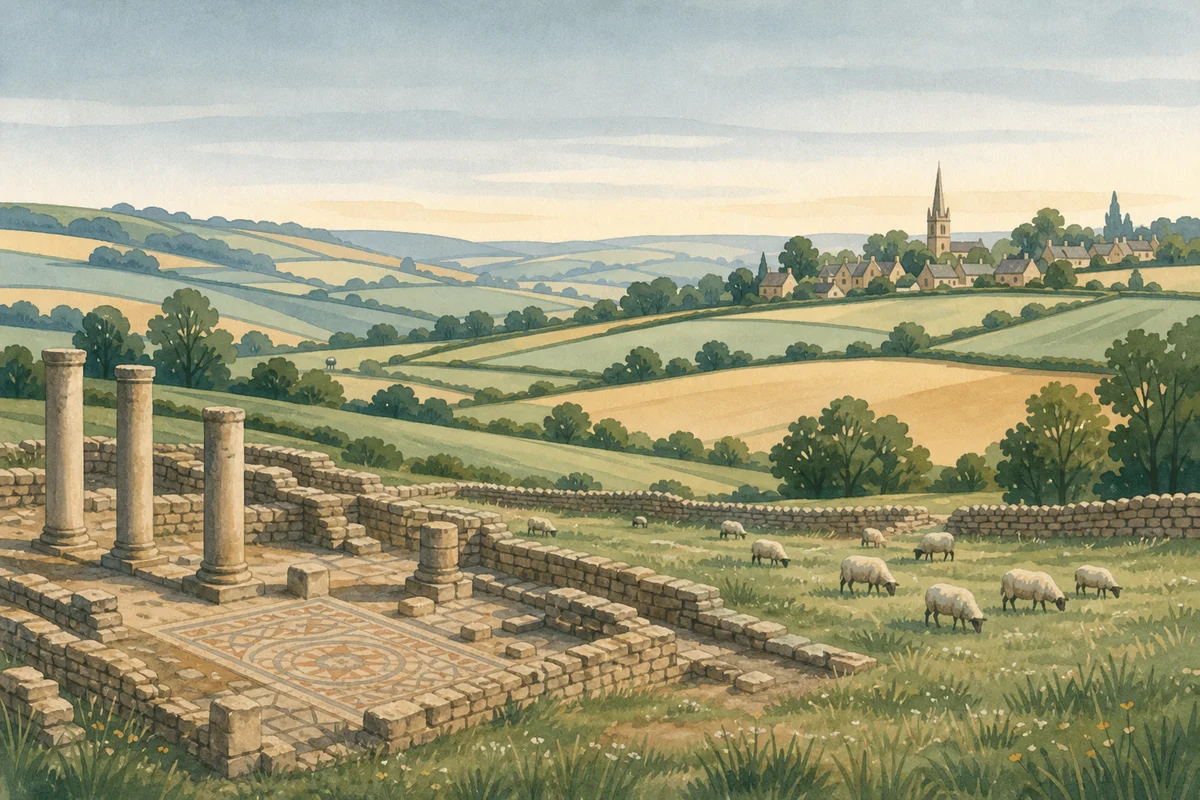
Walking along Kingshill Lane in Cirencester, you're treading over the remains of Corinium Dobunnorum, a Roman town that ranked second only to London in importance across Roman Britain.
This stretch of the lane was a hub of Roman activity, with archaeologists regularly uncovering fragments of domestic dwellings, industrial sites, and suburban features like cemeteries and villas that once sprawled beyond the town walls.
You won't find dramatic ruins standing above ground here – most of what remains lies buried beneath the modern streets and surrounding fields. But knowing what lies underneath really shifts how you experience the place. You can imagine the everyday life that unfolded across these same streets two thousand years ago, the commerce and craftsmanship that made Corinium such a vital settlement.
To get a proper sense of the archaeology from Kingshill Lane and the broader Corinium site, head to the Corinium Museum in Cirencester's town centre. It's genuinely worth your time. The collection includes exceptional mosaics, pottery, coins, and everyday tools recovered from excavations in this area, which help you visualize the Roman town as it actually was. Seeing these objects really brings home just how significant Cirencester was during the Roman period, and how much history literally surrounds you as you walk these lanes today.
Visitor reviews
Every review has a sheep rating. If you have dogs on your account, you can add an optional dog-friendly paw rating when you post.